How a kammprofile (camprofile) gasket is built
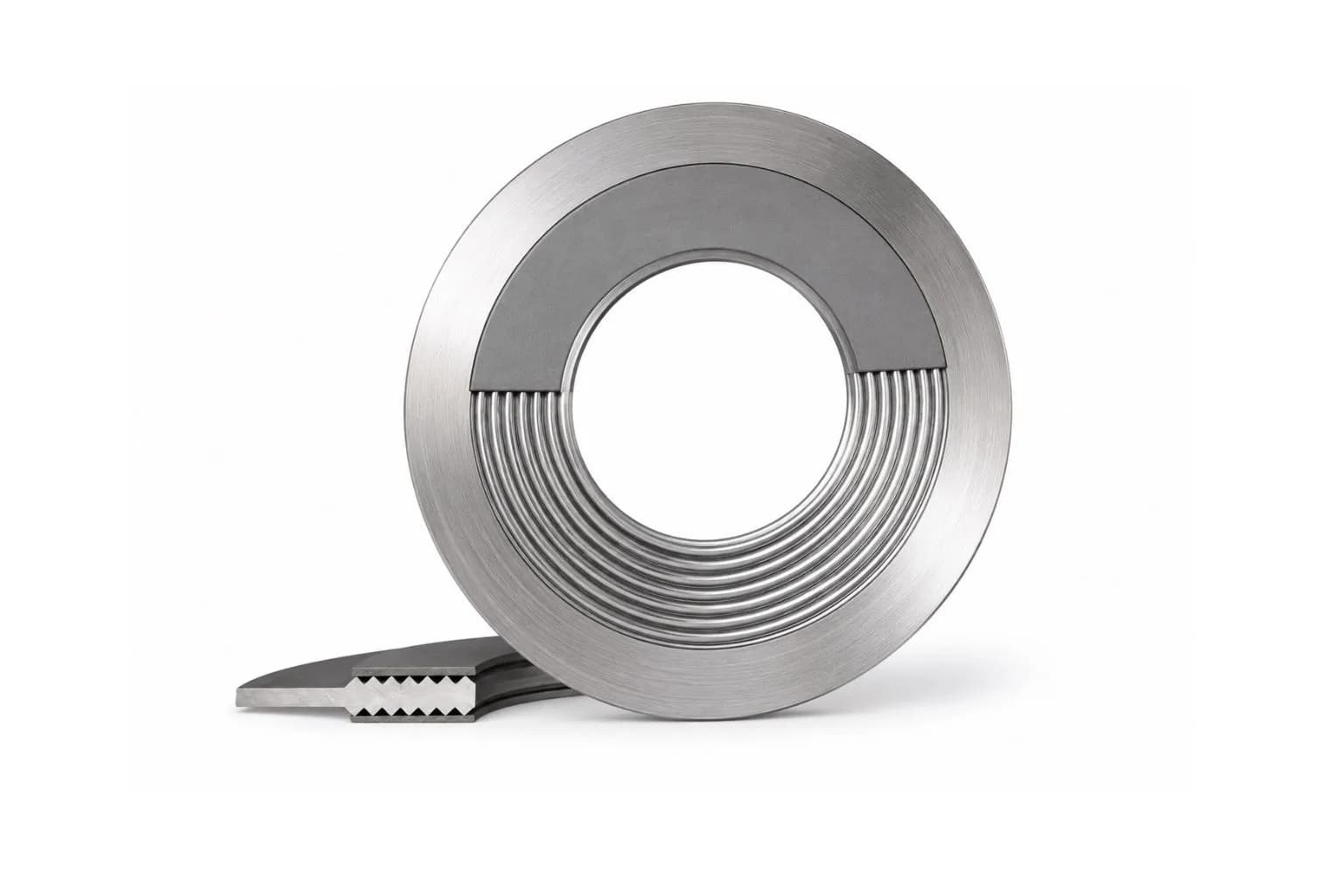
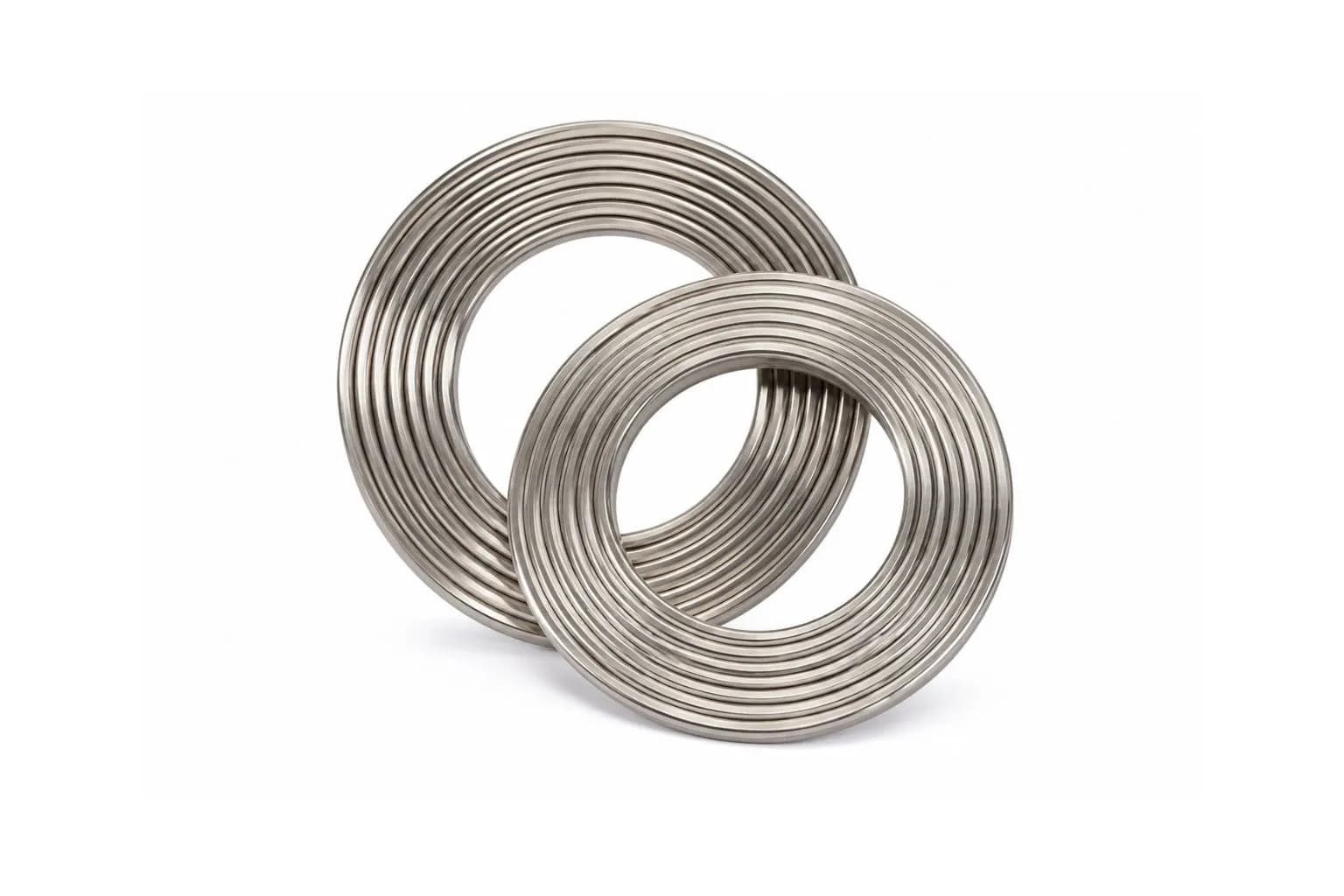
The metal core is machined with concentric serrations. Soft facing — usually flexible graphite or PTFE — is applied over the serrations. Under bolt load, the facing flows into the grooves and forms a tight seal while the core provides strength and recovery.
Camprofile gasket is simply another spelling used in the industry for the same construction. When a drawing says camprofile or kammprofile, the manufacturing intent is the same.
Kammprofile gasket dimensions
Kammprofile gasket dimensions are set by the flange sealing face — outer diameter, inner diameter, and facing thickness. Unlike RTJ rings, there is no universal R-number table; sizes follow ASME, EN, or custom equipment drawings.
We manufacture standard flange sizes and custom profiles for heat exchangers and vessels. Share the flange drawing for an exact dimensional match.
Kammprofile vs spiral wound — when to choose which
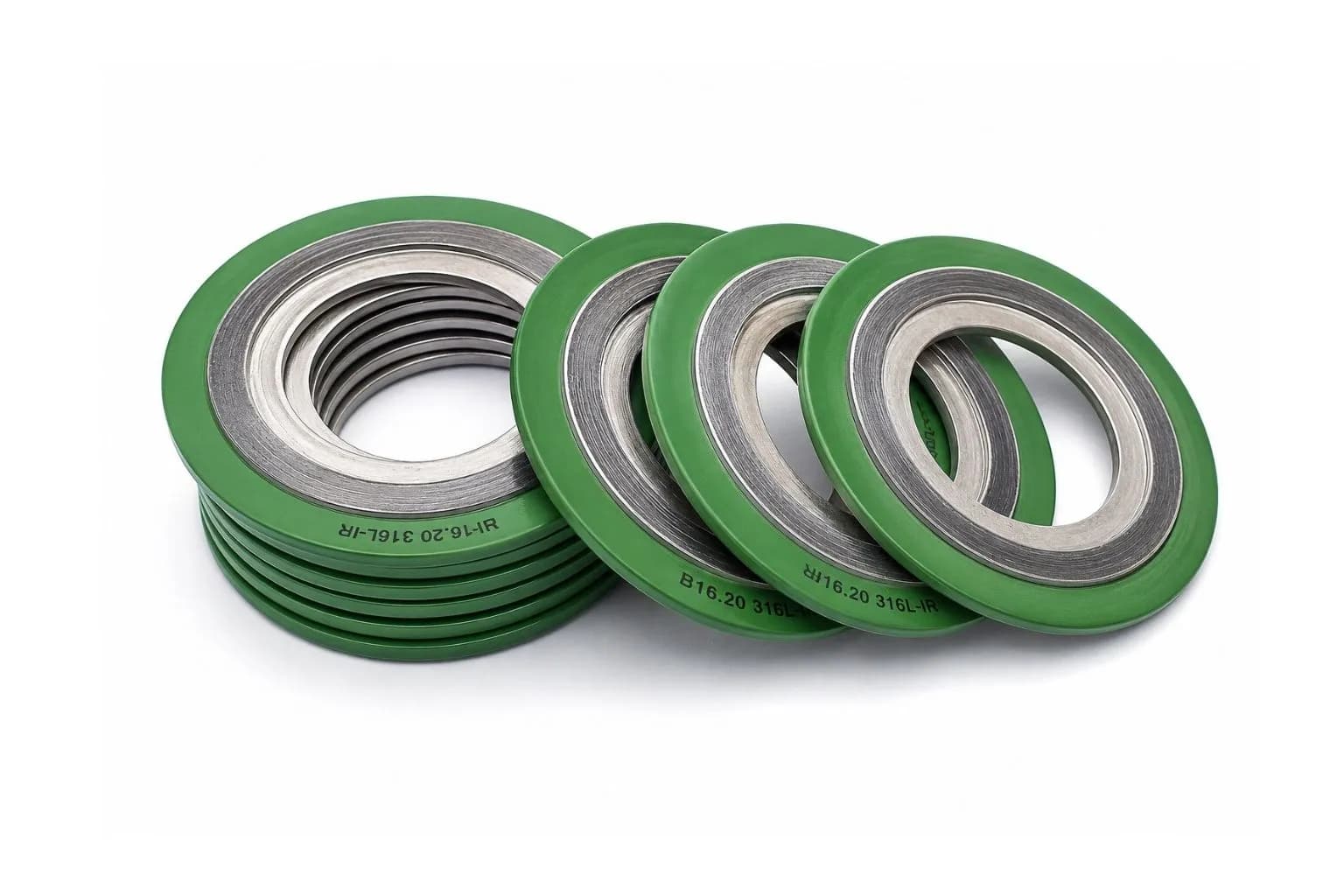
Spiral wound gaskets use alternating metal and filler windings and are widely standardised under ASME B16.20. Kammprofile gaskets use a solid serrated core and often seat at lower stress with excellent recovery under load changes.
Choose spiral wound for most standard ASME flange programmes. Choose kammprofile when flange design, cycling, or seating-stress limits favour a serrated-core construction. Our selection guide on the blog covers the comparison in more detail.
Facing options for heat-resistant service
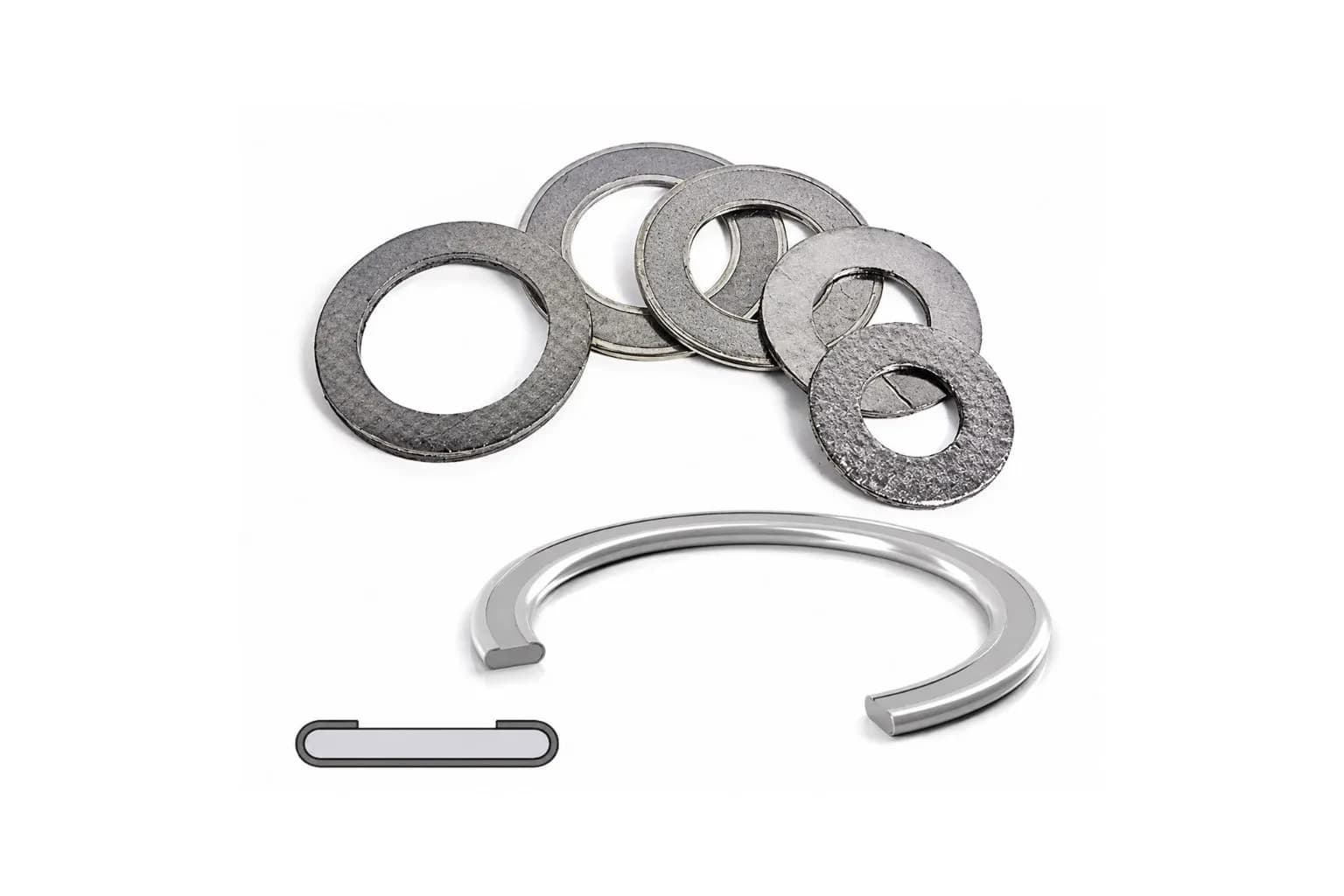
Graphite facing is the usual choice for heat-resistant gasket duty on steam and hydrocarbon lines. PTFE facing is used where chemical resistance at the sealing surface matters more than extreme temperature.