Quick summary
- PTFE and Teflon describe the same fluoropolymer — confirm the grade (virgin, filled, or ePTFE), not the brand name.
- Virgin PTFE suits pharma and food service; filled PTFE handles higher bolt loads; ePTFE conforms to worn flanges.
- PTFE resists most chemicals but has a lower temperature ceiling (~260°C) than graphite-filled semi-metallic gaskets.
- Never reuse a compressed PTFE gasket in critical chemical service — always replace on flange opening.
Industrial sealing often means aggressive chemicals, elevated temperatures, and corrosive environments where rubber and fibre gaskets fail. Specify the wrong material and you risk leaks, equipment damage, unplanned downtime, and safety incidents.
A PTFE gasket is one of the most reliable non-metallic seals for these demanding applications. Known for exceptional chemical resistance, low friction, and a wide operating temperature range, PTFE gaskets are specified wherever long-term sealing performance and media compatibility are critical.
This guide covers PTFE gasket properties, virgin vs filled vs expanded types, real-world applications, advantages and limitations, selection criteria, and common installation mistakes — so engineers and procurement teams can specify with confidence.
What is a PTFE gasket?
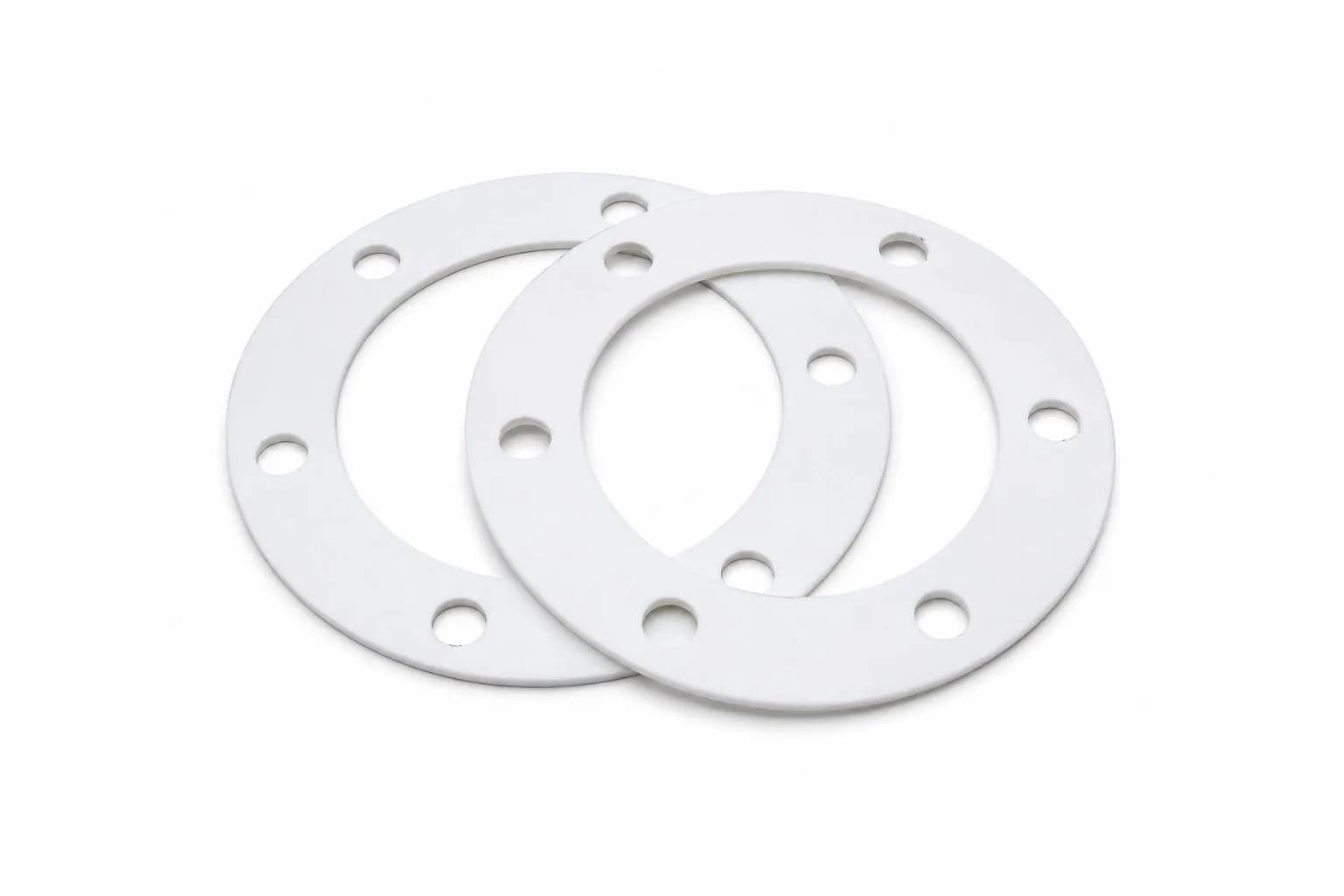
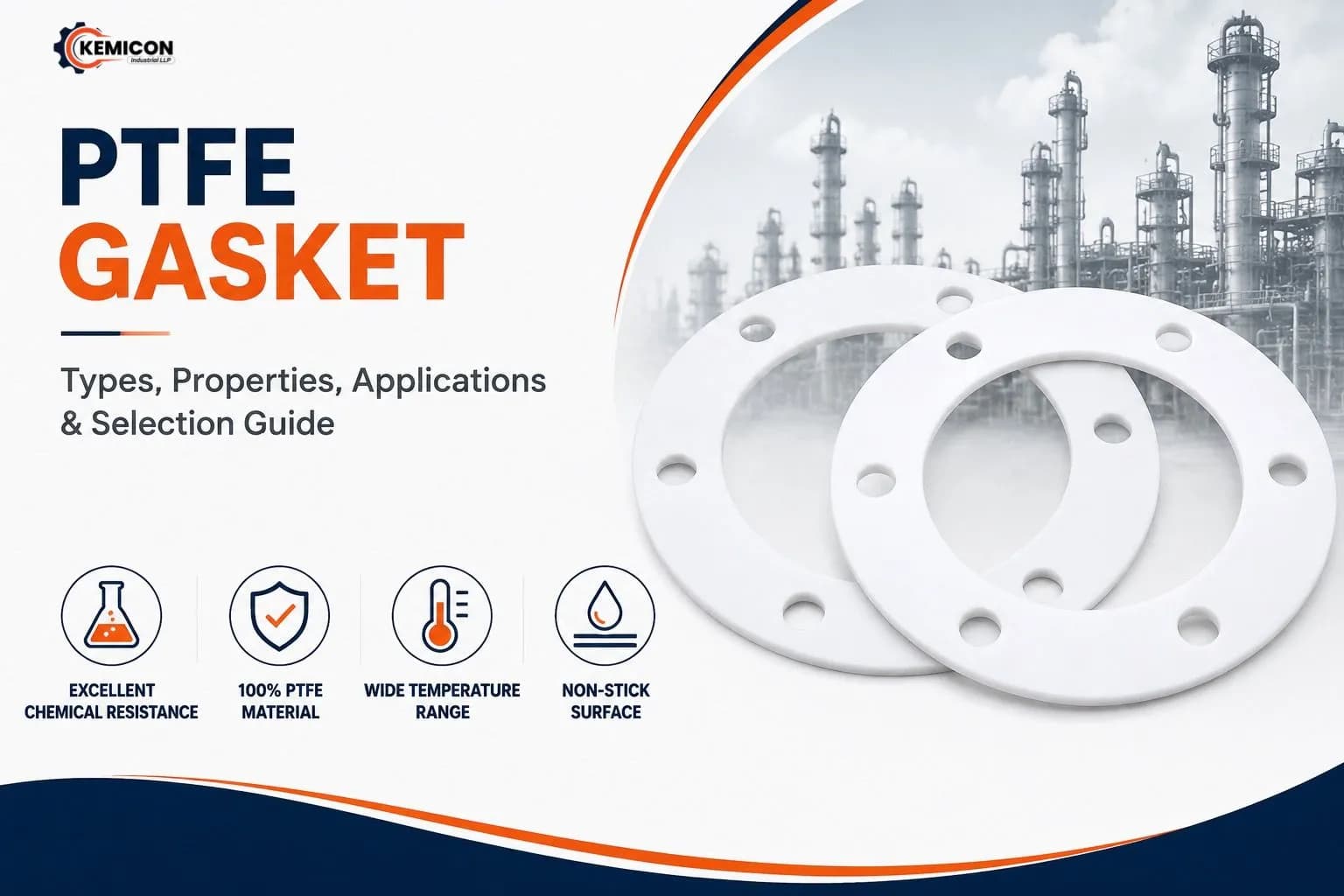
A PTFE (Polytetrafluoroethylene) gasket is a non-metallic sealing component cut or moulded from PTFE material — commonly known by the brand name Teflon. It creates a leak-tight seal between two mating flange surfaces while resisting chemicals, moisture, and a wide range of operating conditions.
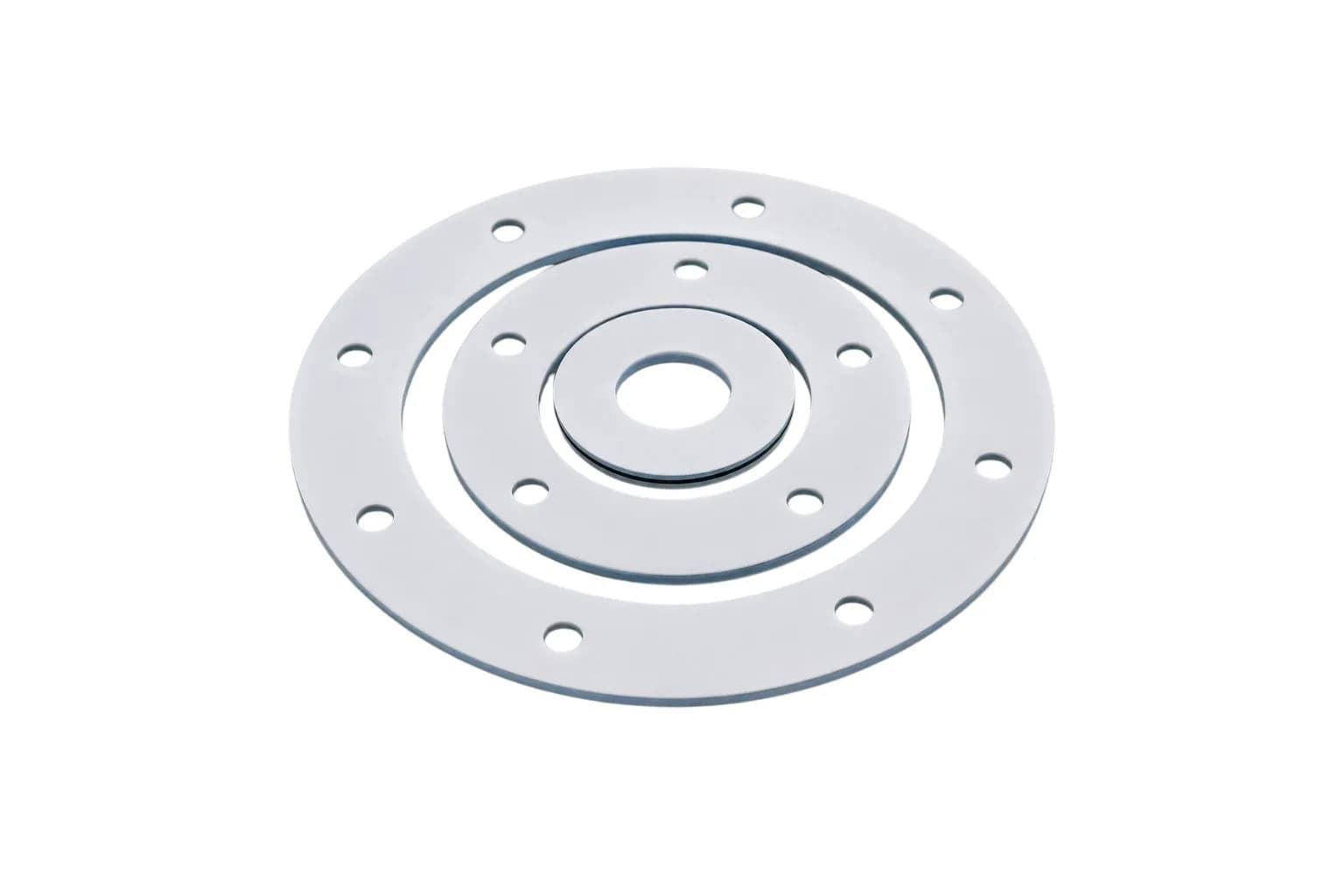
Unlike rubber or compressed fibre gaskets, PTFE does not react with most process media, making it the preferred choice for strongly corrosive acids, alkalis, solvents, and high-purity chemical service. PTFE gaskets are available as full-face sheet cuts, ring-type configurations, envelope constructions, and spiral wound filler — each suited to different flange types and pressure classes.
For buyers sourcing a PTFE gasket manufacturer, confirm the PTFE grade, gasket style, and applicable food or pharma compliance before ordering.
PTFE vs Teflon — are they the same?
This is one of the most common questions from procurement teams and plant engineers — and the answer is straightforward.
PTFE is the generic chemical name for polytetrafluoroethylene. Teflon is a trademarked brand name originally registered for PTFE products. In industrial applications, the terms PTFE gasket and Teflon gasket are used interchangeably to describe gaskets manufactured from the same fluoropolymer material.
When specifying, always confirm the actual PTFE grade (virgin, filled, or expanded) rather than relying on brand names alone.
Key properties of PTFE gaskets
PTFE gaskets are chosen because they combine physical and chemical properties that few other gasket materials can match in corrosive service.
- Excellent chemical resistance — inert to most acids, alkalis, solvents, and corrosive process fluids
- Wide temperature range — typically -200°C to +260°C continuous service (verify grade-specific limits)
- Non-stick, low-friction surface — minimises adhesion and simplifies maintenance during equipment servicing
- Excellent electrical insulation — suitable where electrical resistance is required
- Zero moisture absorption — performs reliably in wet environments and fluid handling systems
- Non-contaminating — preferred for pharmaceutical, food, and high-purity chemical applications
Types of PTFE gaskets
PTFE gasket types differ by material grade and construction. Selecting the correct type depends on pressure class, flange condition, chemical compatibility, and mechanical load requirements.
Virgin PTFE gasket
Virgin PTFE gaskets are manufactured from pure, unfilled PTFE resin. They offer maximum chemical inertness and are the default choice for pharmaceutical, food processing, and high-purity chemical applications where contamination must be avoided.
Virgin PTFE is also the most common PTFE gasket sheet material — cut to full-face or ring-type dimensions for raised-face and flat-face flanges in moderate pressure service.
Filled PTFE gasket
Filled PTFE incorporates reinforcing additives to improve mechanical strength, reduce cold flow (creep), and handle higher bolt loads. Common fillers include glass fibre, carbon, graphite, and bronze — each modifying the balance of chemical resistance, compressibility, and wear resistance.
Filled PTFE gaskets are specified for higher-load industrial applications where virgin PTFE alone would deform under sustained bolt stress. Always confirm filler compatibility with the process medium before selecting a filled grade.
- Glass fibre filled — improved strength and dimensional stability
- Carbon filled — enhanced thermal conductivity and wear resistance
- Graphite filled — lower friction with good chemical resistance
- Bronze filled — higher compressive strength for demanding mechanical loads
Expanded PTFE (ePTFE) gasket
Expanded PTFE (ePTFE) is a modified PTFE form with a fibrillated structure that offers greater flexibility and improved conformability on uneven, worn, or pitted flange surfaces.
ePTFE gaskets seal where rigid virgin PTFE sheet may not conform adequately to flange face irregularities. They are widely used in glass-lined equipment, aged flanges, and applications requiring a softer, more forgiving sealing material — while retaining PTFE's chemical inertness.
Advantages of PTFE gaskets
PTFE gaskets deliver a combination of properties that make them the default seal for corrosive and contamination-sensitive service.
- Outstanding resistance to acids, alkalis, and aggressive solvents
- Excellent corrosion resistance across a wide chemical spectrum
- Very low coefficient of friction — non-stick sealing surface
- Reliable sealing performance in wet and humid environments
- Non-contaminating material for pharma and food-grade service
- Long service life in correctly specified chemical applications
- Available in standard flange sizes and fully custom dimensions
- Easy to machine, cut, and fabricate into complex gasket profiles
Common PTFE gasket applications
PTFE gaskets are specified wherever process media would degrade rubber, fibre, or metal-filled seals. Typical applications include:
- Chemical processing — reactors, transfer lines, and storage vessels
- Petrochemical — corrosive hydrocarbon and acid service
- Pharmaceutical manufacturing — high-purity process lines
- Food and beverage — hygienic flange sealing (FDA-compliant grades)
- Water treatment — pump, valve, and pipeline flanges
- Pulp and paper — chemical recovery and bleaching systems
- Fertiliser plants — acid and alkali handling equipment
- Laboratories and pilot plants — small-bore flange connections
- Industrial pipelines, pumps, valves, and heat exchangers
PTFE gasket vs rubber gasket
Rubber gaskets (EPDM, NBR, Viton) suit water, steam, and general utility service at moderate cost. PTFE gaskets are specified when chemical resistance, temperature capability, or contamination control requirements exceed what elastomer seals can deliver.
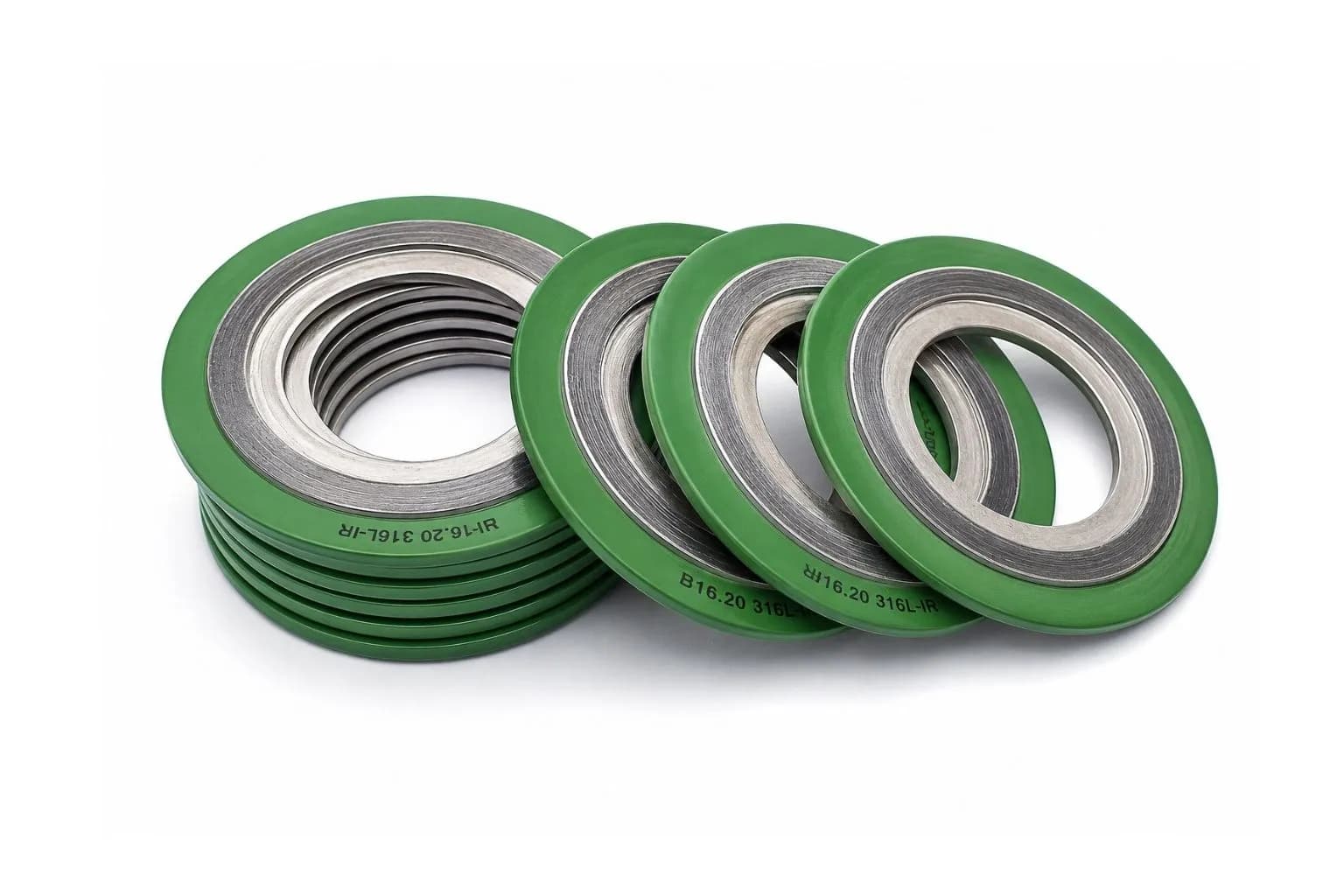
For semi-metallic alternatives in higher pressure class piping, see our guides to spiral wound gaskets and RTJ gaskets — both can incorporate PTFE as a filler or facing material.
How to choose the right PTFE gasket
Correct PTFE gasket selection depends on matching material grade, gasket style, and dimensions to the actual operating conditions — not habit or lowest unit price.
- Process media — confirm chemical compatibility with the exact fluid, concentration, and contaminants
- Operating temperature — minimum and maximum; verify grade-specific limits for virgin, filled, or ePTFE
- Operating pressure — higher-pressure service may require filled PTFE or a semi-metallic PTFE-faced gasket
- Flange design — full-face vs ring-type; raised face vs flat face; confirm NPS and pressure class
- Flange condition — worn or uneven faces may benefit from ePTFE or envelope gasket construction
- Industry compliance — FDA, USP Class VI, or project-specific material certification requirements
- Gasket style — sheet cut, envelope, spiral wound PTFE filler, or custom engineered profile
Common mistakes to avoid
Even high-quality PTFE gaskets fail when incorrectly specified or installed. Avoid these frequent errors:
- Selecting the wrong PTFE grade for the pressure or temperature class
- Ordering incorrect gasket dimensions — inner diameter, outer diameter, or bolt hole pattern
- Uneven bolt tightening causing flange distortion and local over-compression
- Reusing a compressed or damaged PTFE gasket after opening a flange
- Ignoring chemical compatibility of filled PTFE additives with the process medium
- Installing on excessively damaged flange faces without considering ePTFE or surface repair
Why specify Kemicon for PTFE gaskets
PTFE gasket performance depends on material grade purity, accurate cutting tolerances, and correct style selection for the flange and service — none of which is visible once the joint is closed.
Kemicon Industrial LLP manufactures PTFE gaskets in virgin, filled, and expanded grades for chemical, pharmaceutical, petrochemical, food processing, and general industrial applications. Standard catalogue sizes and fully custom dimensions are available, with technical support to confirm grade, style, and compliance requirements before manufacture.
View our PTFE gasket product range or request a quotation — share your flange dimensions, process medium, temperature, pressure class, and any certification requirement, and our engineering team will confirm the correct specification.
Quick recommendations
- Aggressive acids / alkalis / solventsVirgin PTFE sheet cut
- Pharmaceutical / high purityVirgin PTFE — confirm USP/FDA grade
- Food processing flangesVirgin PTFE — FDA-compliant grade
- Higher pressure / bolt loadFilled PTFE (glass or carbon)
- Worn or uneven flange facesExpanded PTFE (ePTFE) or envelope gasket
- High temperature above ~260°CGraphite-filled spiral wound (see SWG guide)
Frequently asked questions
What is a PTFE gasket?
Is PTFE the same as Teflon?
Where are PTFE gaskets used?
Are PTFE gaskets resistant to chemicals?
Can PTFE gaskets be used in food processing?
What is the difference between virgin PTFE and filled PTFE?
Can PTFE gaskets be manufactured in custom sizes?
How long do PTFE gaskets last?
Still unsure which specification fits?
Talk to our gasket engineer. Share medium, temperature, pressure class, and flange standard - we will recommend the right construction.