Quick summary
- Metal jacketed gaskets combine a soft filler core with a protective metal jacket for strength and sealability.
- Double jacketed gaskets fully enclose the filler — preferred for heat exchangers, boilers, and pressure vessels.
- Graphite filler for high temperature; PTFE filler for aggressive chemical service.
- Never reuse a compressed jacketed gasket — the filler will not recover fully after decompression.
Industrial equipment operating under high temperatures and moderate-to-high pressures needs sealing solutions that combine mechanical strength with reliable leak prevention. On heat exchangers, boilers, pressure vessels, and refinery equipment, conventional soft gaskets often lack the durability and dimensional stability the application demands.
A metal jacketed gasket addresses these challenges by combining a soft compressible filler with a protective metal jacket. The jacket provides mechanical strength and shields the filler from pressure, temperature, and corrosive environments — while the filler conforms to flange surface irregularities to create the seal.
This guide covers metal jacketed gasket construction, single vs double jacket types, filler and jacket materials, applications, selection criteria, and common installation mistakes — so engineers and procurement teams can specify with confidence.
What is a metal jacketed gasket?
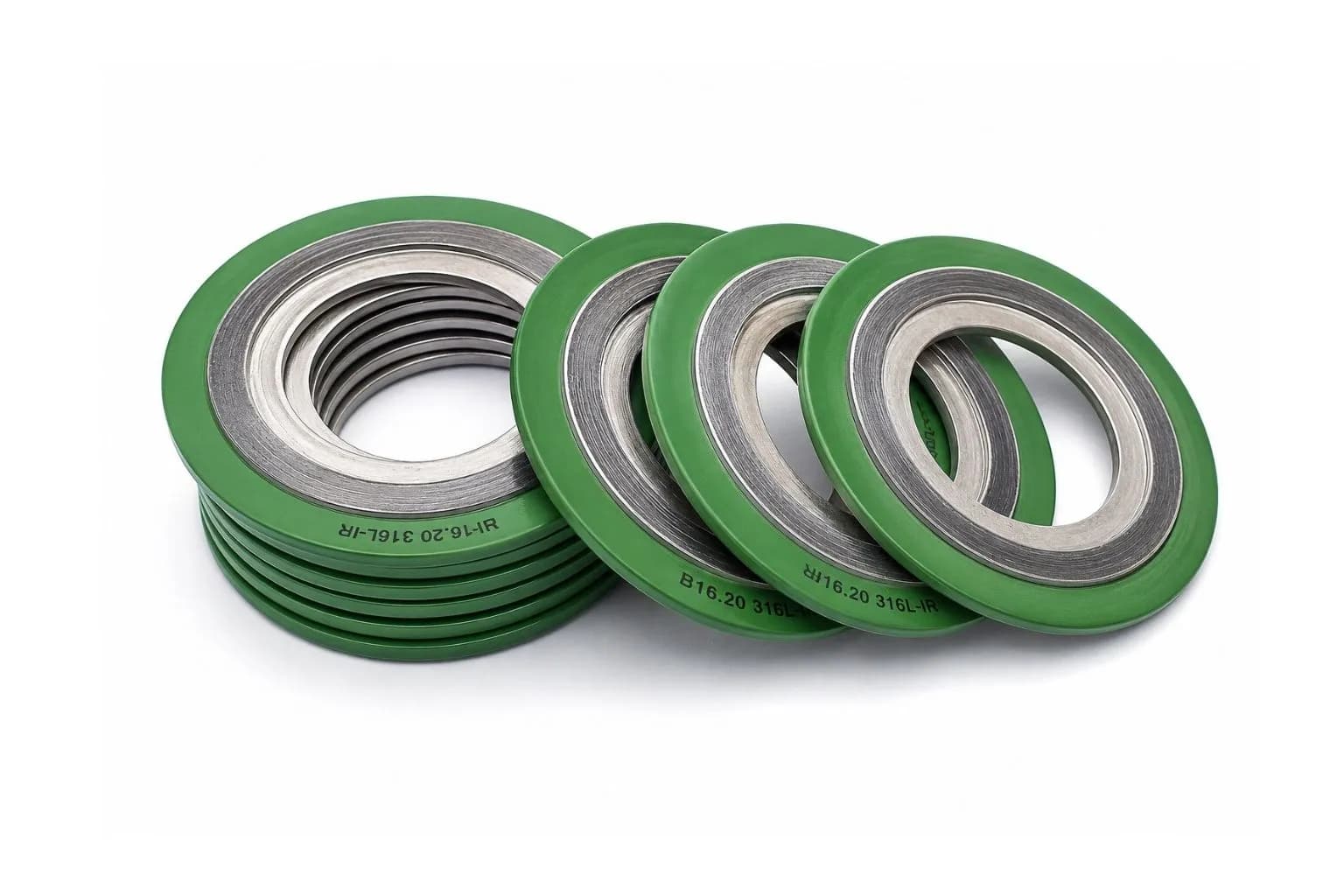
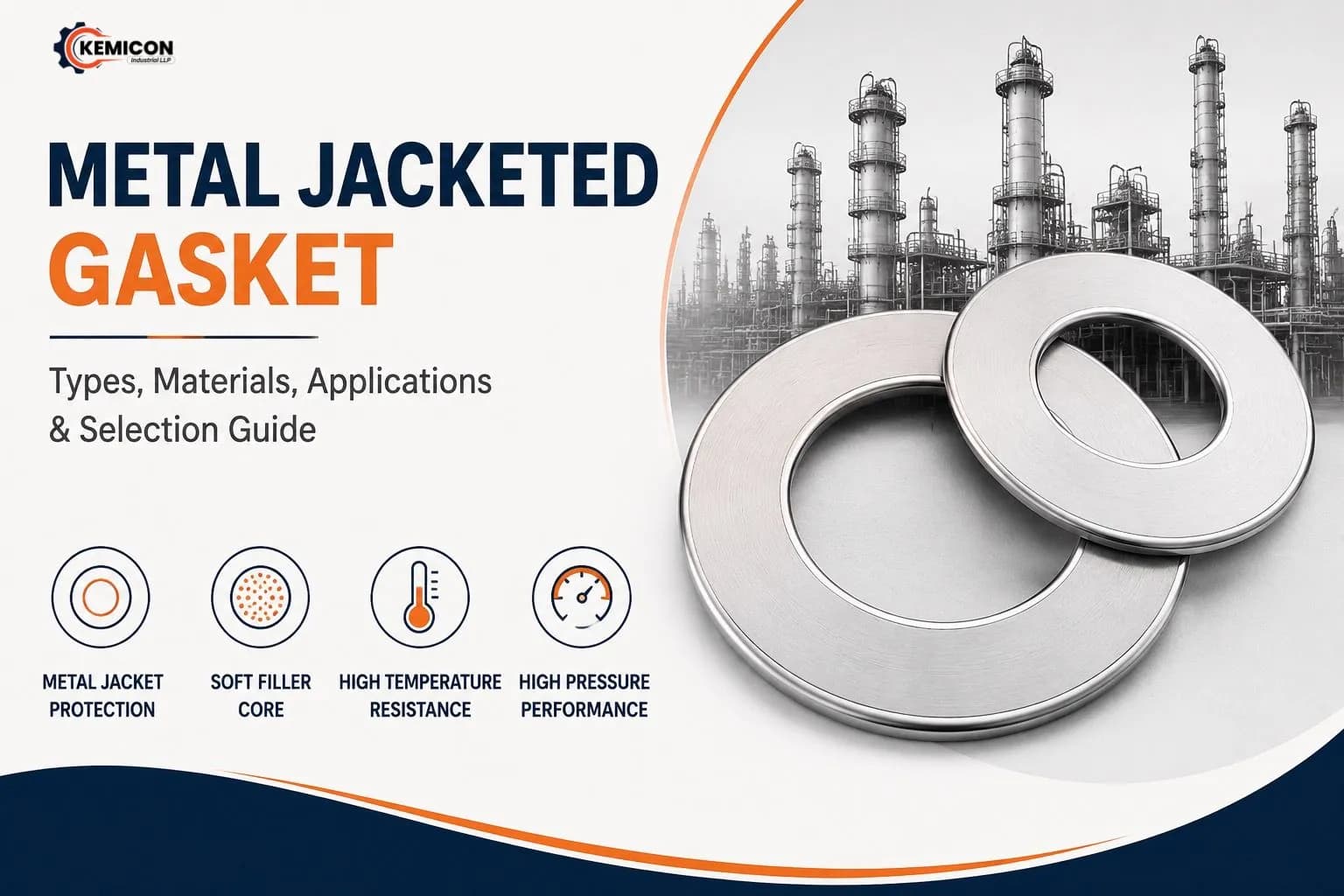
A metal jacketed gasket is a semi-metallic seal consisting of a soft filler material completely or partially enclosed within a thin metallic jacket. The metal jacket provides mechanical strength, protects the filler from extrusion under bolt load, and resists damage from high temperatures and corrosive process environments.
The filler — typically flexible graphite, ceramic fibre, PTFE, or non-asbestos fibre — compresses into flange surface irregularities to create the actual seal. Metal jacketed gaskets are commonly specified on heat exchangers, boilers, and equipment where durability, dimensional stability, and long service life are essential.
How does a metal jacketed gasket work?
When flange bolts are tightened, two materials work together. The soft filler compresses to fill microscopic imperfections on the flange face. The metal jacket distributes load evenly across the gasket and prevents the filler from extruding outward under pressure.
This construction maintains a reliable seal under thermal cycling, vibration, and elevated temperatures — provided the correct jacket metal and filler grade are matched to the operating conditions.
Construction of a metal jacketed gasket
Every metal jacketed gasket combines a soft filler core with a protective metal jacket. Understanding both components is essential for correct specification.
Soft filler materials
The filler provides flexibility, compressibility, and sealing capability. Filler selection depends on process media, operating temperature, and pressure requirements.
- Flexible Graphite — high temperature, steam, and hydrocarbon service (most common filler)
- Ceramic Fibre — extreme high-temperature applications
- PTFE — aggressive chemicals and high-purity process lines
- Non-Asbestos Fibre (CNAF) — general industrial service at moderate temperature
Metal jacket materials
The outer metal jacket provides structural integrity and protects the filler from mechanical damage, extrusion, and corrosive attack. Jacket material selection depends on corrosion resistance, temperature, and application requirements.
- Stainless Steel 304 — general industrial and heat exchanger service
- Stainless Steel 316 — chloride and chemically aggressive environments
- Carbon Steel — lower-cost applications where corrosion is not a concern
- Copper — specialist applications requiring thermal conductivity
- Monel — hydrofluoric acid and seawater service
- Inconel — extreme temperature and severe corrosion duty
- Hastelloy — highly aggressive chemical environments
Types of metal jacketed gaskets
Metal jacketed gasket types differ by the number of jacket layers and whether the design is standard catalogue or custom-engineered.
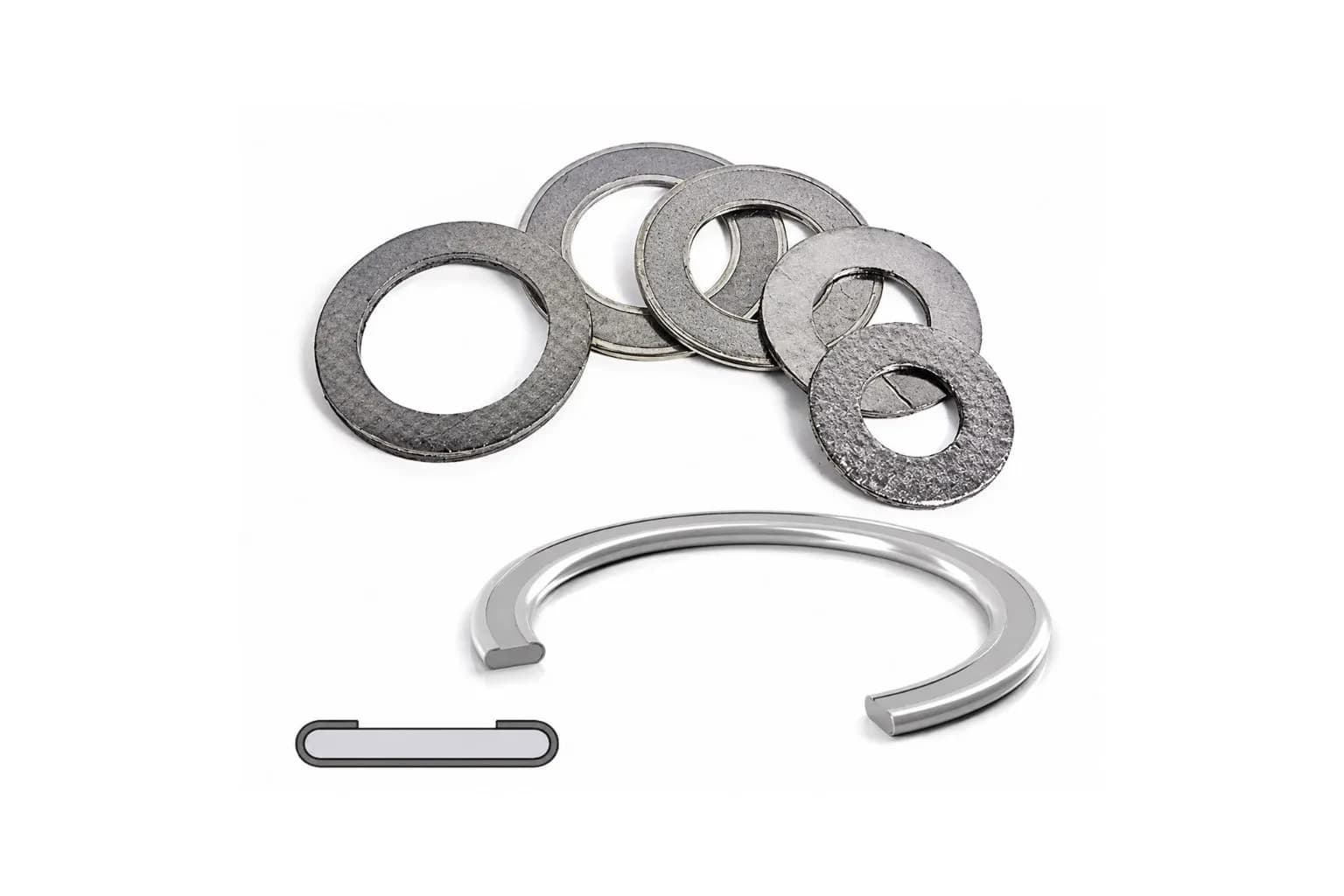
- Single jacketed gasket — one metal layer partially encloses the filler; suited to moderate operating conditions
- Double jacketed gasket — two metal layers fully enclose the filler for improved strength, durability, and filler protection; commonly specified on heat exchangers, boilers, and pressure vessels
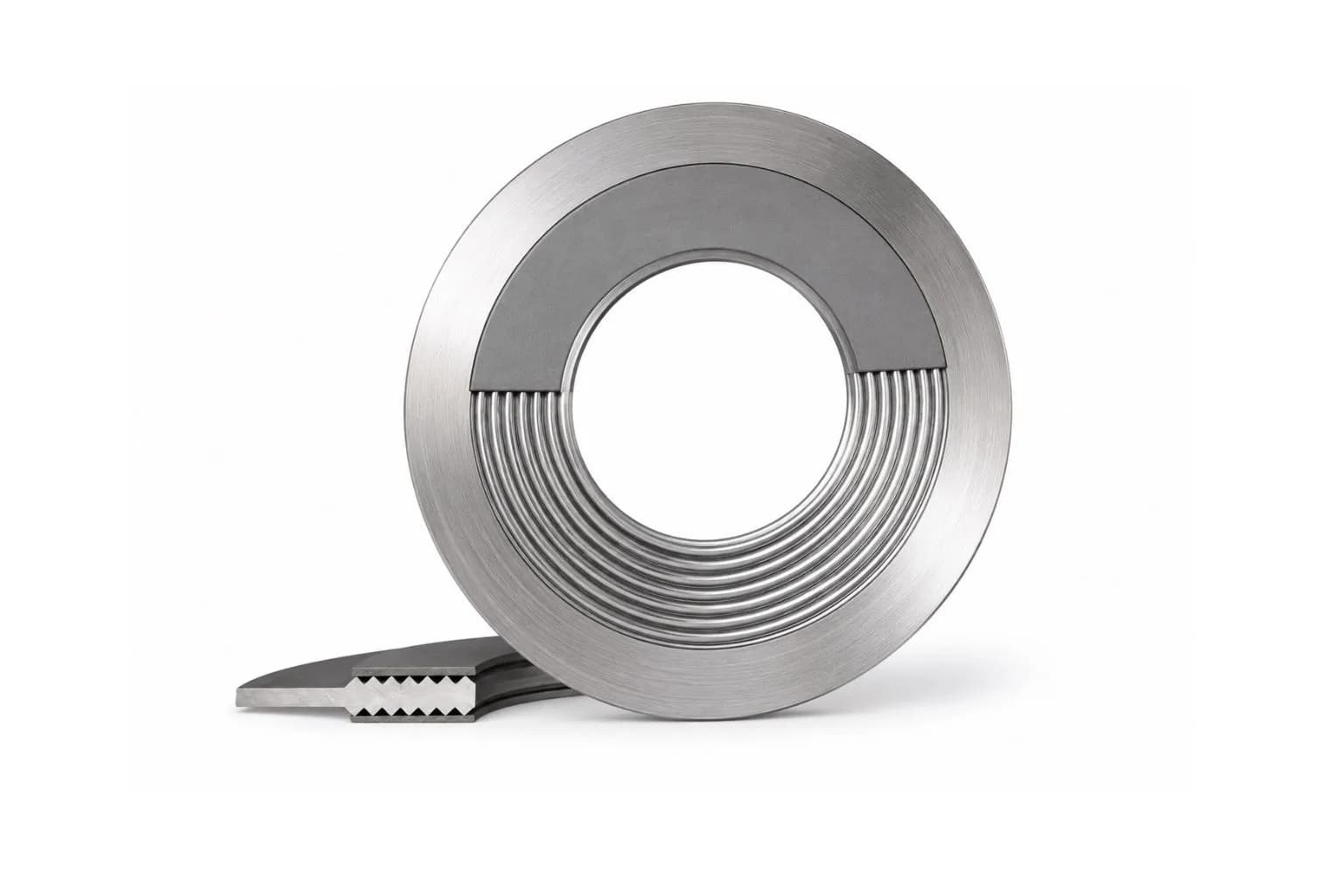
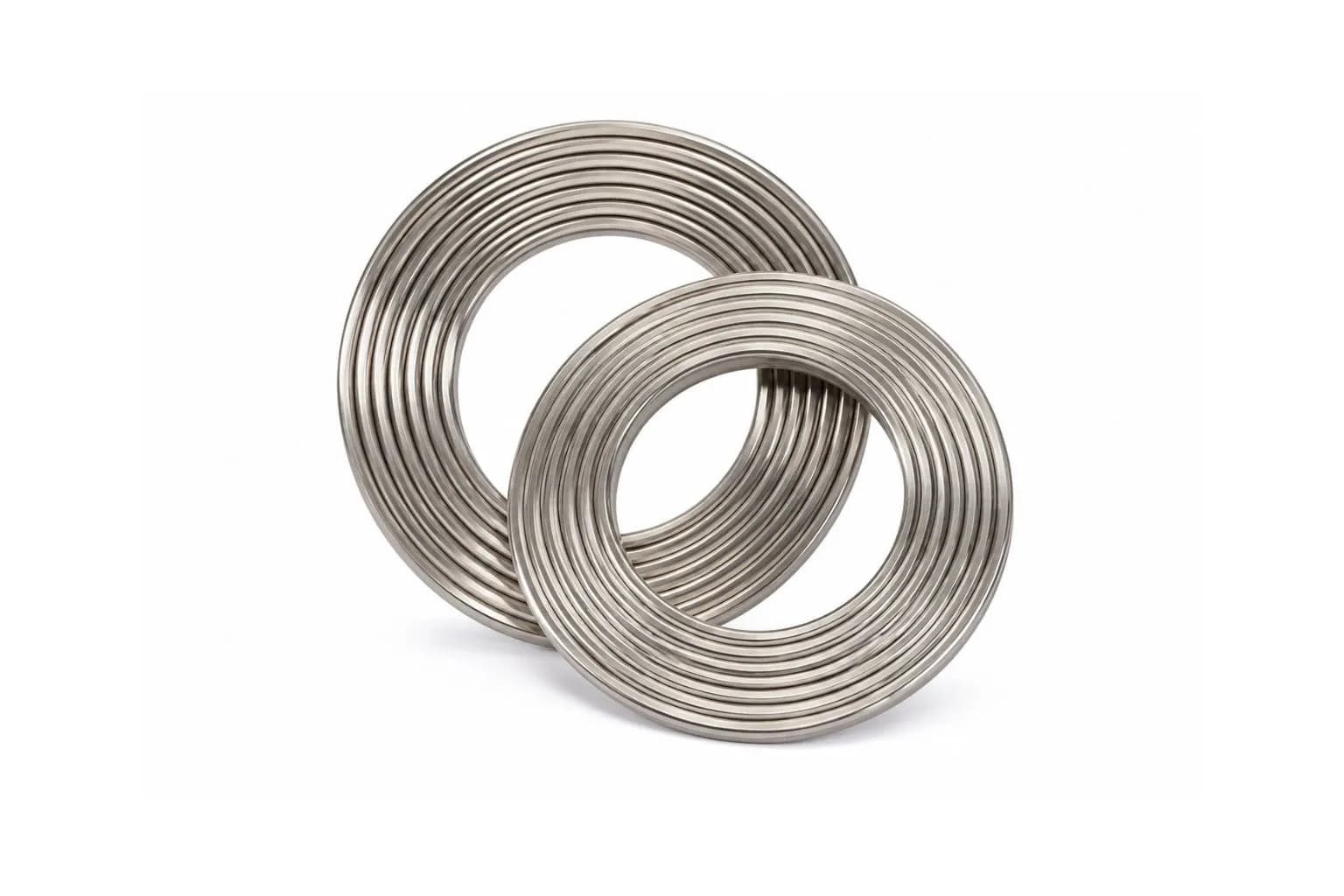
- Corrugated metal jacketed gasket — combines a corrugated metal core with a protective jacket for improved resilience
- Custom metal jacketed gasket — manufactured to specific equipment dimensions, operating conditions, and project requirements
Advantages of metal jacketed gaskets
Metal jacketed gaskets are specified wherever soft filler performance must be combined with metal-level mechanical protection.
- Excellent sealing performance through compressible filler core
- High mechanical strength and blowout resistance from metal jacket
- Suitable for high-temperature service with graphite or ceramic filler
- Good pressure resistance in properly rated flange systems
- Long service life and excellent dimensional stability
- Metal jacket protects filler from extrusion and mechanical damage
- Preferred for heat exchanger, boiler, and vessel applications
- Available in standard flange sizes and fully custom dimensions
Common metal jacketed gasket applications
Metal jacketed gaskets are widely used wherever high-temperature sealing and mechanical durability are essential.
- Heat exchangers — shell, tube sheet, and channel cover flanges
- Boilers and steam generation equipment
- Pressure vessels and process reactors
- Refineries and petrochemical plants
- Oil and gas processing facilities
- Chemical processing plants
- Power generation plants and turbine equipment
- Marine engine room and process systems
- Industrial furnaces, compressors, and pumps
Metal jacketed gasket vs corrugated metal gasket
Both are metallic sealing solutions for demanding industrial service, but they differ in construction and sealing mechanism. A metal jacketed gasket relies on filler compression protected by a metal envelope; a corrugated metal gasket uses corrugation recovery with optional facing layers.
Metal jacketed gaskets offer superior mechanical protection of the filler and are the default for heat exchangers where filler extrusion is a concern. Corrugated metal gaskets excel in recovery and thermal cycling. For a detailed corrugated comparison, see our Corrugated Metal Gasket Guide.
How to choose the right metal jacketed gasket
Correct metal jacketed gasket specification requires matching jacket metal, filler grade, jacket type, and dimensions to the actual equipment and operating conditions.
- Operating temperature — minimum and maximum; graphite filler for high temperature, PTFE for chemical service below ~260°C
- Operating pressure — confirm single or double jacket construction suits the equipment pressure rating
- Process media — select compatible jacket metal and filler for chemical resistance
- Flange design — confirm gasket dimensions match the flange seating arrangement and NPS
- Equipment type — double jacketed gaskets for heat exchangers, boilers, and pressure vessels
- Industry standards — ASME B16.20, project specifications, and material certification (MTR)
- Custom requirements — non-standard shapes, pass partitions, or equipment-specific profiles
Common installation mistakes
Incorrect installation reduces sealing performance regardless of gasket quality. Avoid these frequent errors:
- Incorrect bolt tightening sequence — use a star (cross) pattern in multiple passes
- Installing on damaged or heavily pitted flange faces without surface assessment
- Reusing a compressed metal jacketed gasket after opening a flange
- Selecting incompatible jacket metal or filler for the process medium
- Ordering incorrect gasket dimensions — inner diameter, outer diameter, or partition layout
- Uneven bolt load distribution causing local over-compression and filler extrusion
Why specify Kemicon for metal jacketed gaskets
Metal jacketed gasket performance depends on jacket fabrication quality, filler density, and correct material grade selection — none of which is visible once the flange is closed.
Kemicon Industrial LLP manufactures single and double jacketed gaskets with precision fabrication, premium graphite and PTFE fillers, strict dimensional inspection, and Material Test Reports on request. Standard catalogue sizes and fully custom configurations are available for heat exchangers, boilers, pressure vessels, and process equipment.
Share your flange dimensions, operating conditions, and jacket type preference — our engineering team will confirm the correct metal jacketed gasket specification before manufacture.
Quick recommendations
- Heat exchanger flangesDouble jacketed — Graphite filler
- Boiler / steam equipmentDouble jacketed — SS 316 + Graphite
- Chemical / corrosive mediaSS 316 jacket — PTFE filler
- Moderate temperature / pressureSingle jacketed — Graphite filler
- Thermal cycling / recovery priorityCorrugated metal gasket (see guide)
Frequently asked questions
What is a metal jacketed gasket?
What is the difference between a single jacketed and double jacketed gasket?
Where are metal jacketed gaskets used?
Which materials are used in metal jacketed gaskets?
Are metal jacketed gaskets suitable for high temperatures?
Can metal jacketed gaskets be custom manufactured?
Which industries commonly use metal jacketed gaskets?
How do I choose the right metal jacketed gasket?
Still unsure which specification fits?
Talk to our gasket engineer. Share medium, temperature, pressure class, and flange standard - we will recommend the right construction.