Quick summary
- Envelope gaskets combine a PTFE outer envelope with a compressible filler for chemical resistance at lower cost.
- Process media contacts only the PTFE envelope — the filler provides compressibility and sealing.
- Slit envelope for general service; molded envelope for demanding or high-volume applications.
- More economical and easier to seal than solid PTFE — ideal for large-diameter chemical flanges.
Industrial processes involving corrosive chemicals, aggressive media, and contamination-sensitive environments require sealing solutions that combine chemical resistance with reliable mechanical performance. Standard rubber or fibre gaskets often cannot protect against chemical attack while maintaining an effective seal.
An envelope gasket solves this by combining a chemically resistant PTFE outer envelope with a compressible filler core. The PTFE contacts the process media; the filler provides the compressibility needed to seal flange surface irregularities — at a lower cost than a solid PTFE gasket of equivalent size.
This guide covers envelope gasket construction, PTFE envelope types, filler materials, applications, selection criteria, and common installation mistakes — so engineers and procurement teams can specify with confidence.
What is an envelope gasket?
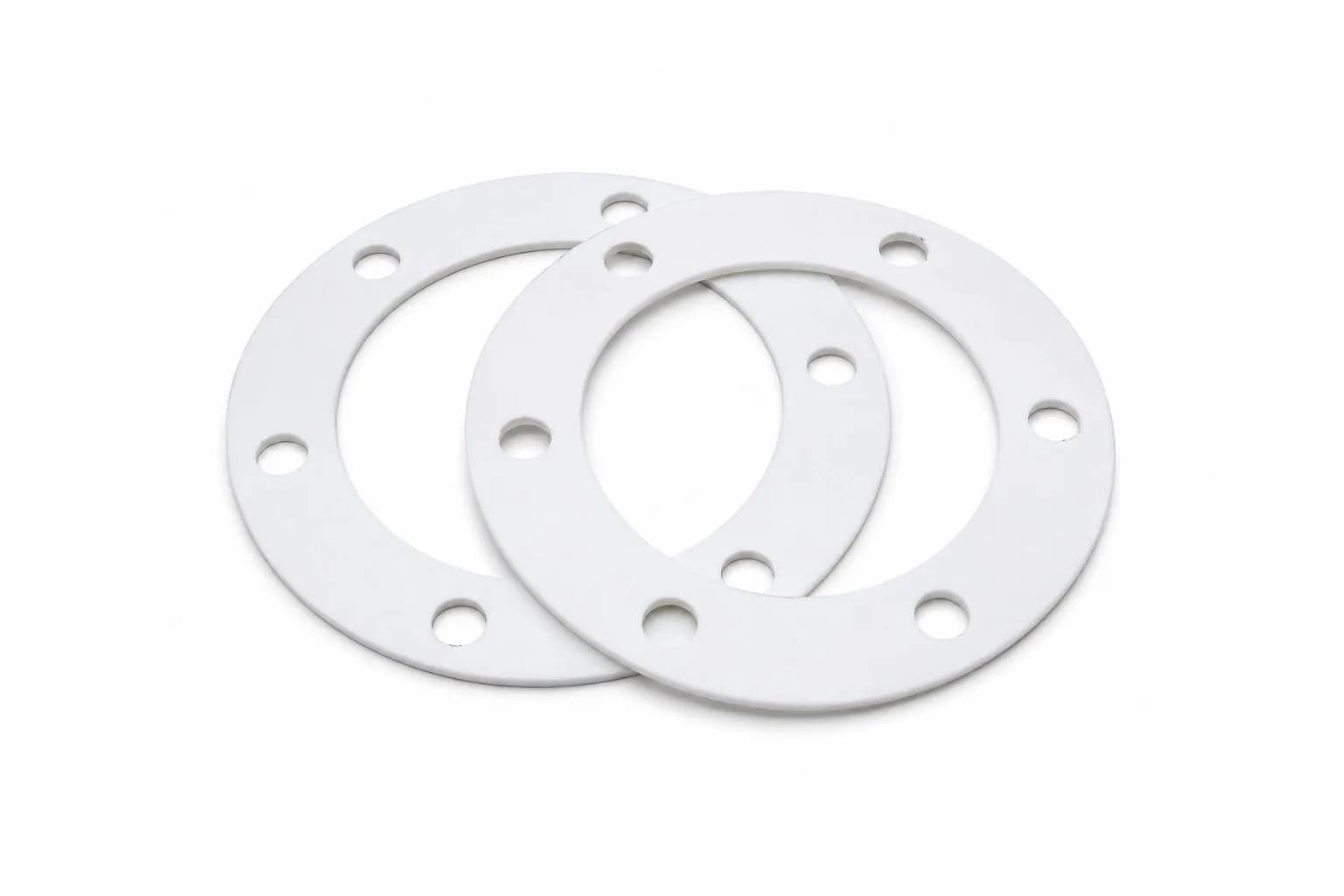
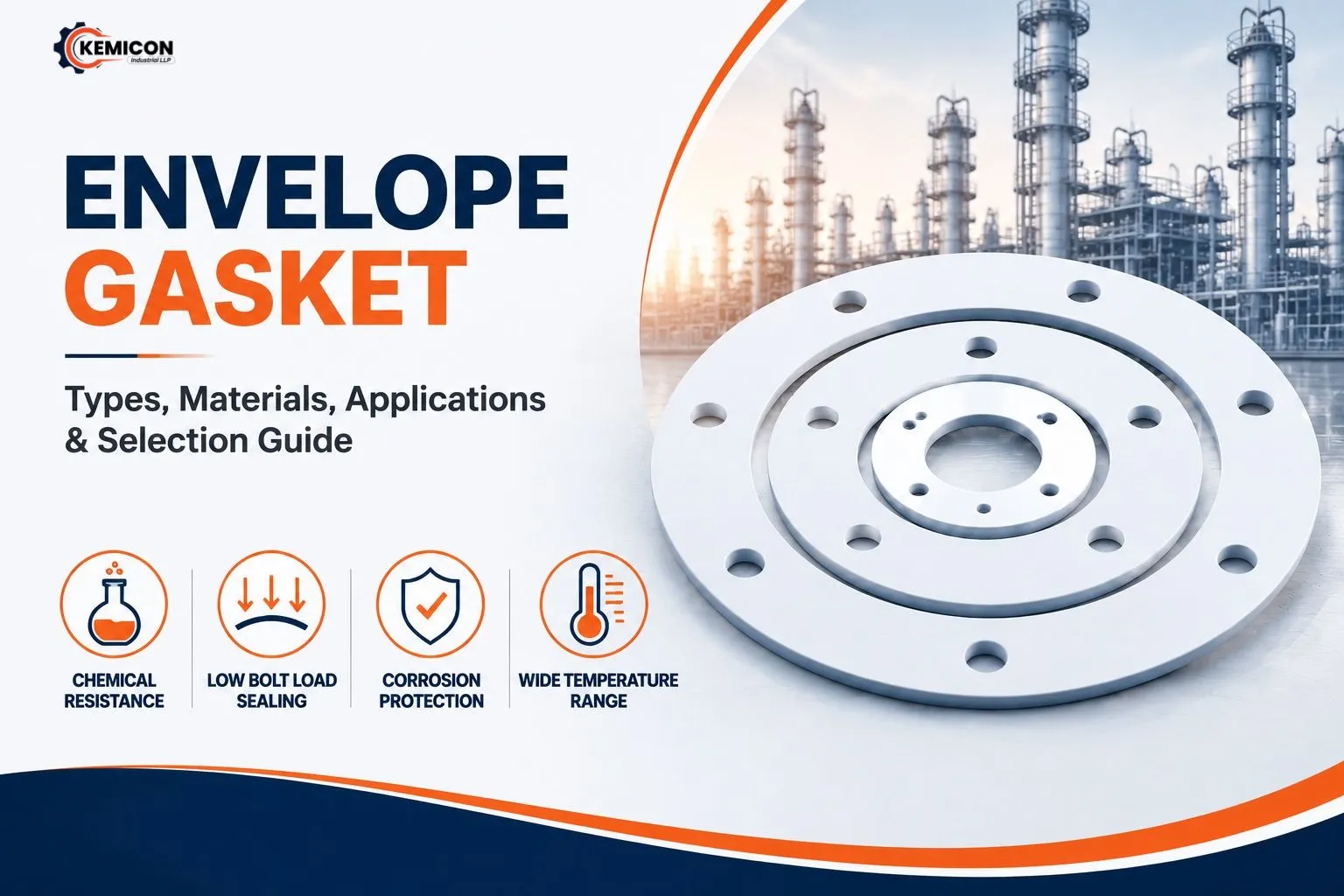
An envelope gasket is a composite seal consisting of a PTFE (polytetrafluoroethylene) outer envelope that completely or partially encloses a soft filler material. The PTFE envelope — also called a Teflon envelope gasket when using the common brand name — contacts the process media, while the internal filler provides compressibility and resilience.
Because PTFE offers exceptional chemical inertness, envelope gaskets are widely specified in chemical processing, pharmaceutical manufacturing, food and beverage, and any industry handling corrosive fluids or contamination-sensitive products.
How does an envelope gasket work?
The PTFE envelope acts as a protective barrier between the process media and the gasket filler. When installed between two flange faces and compressed, the filler deforms to fill microscopic surface irregularities while the PTFE envelope maintains chemical isolation from the process fluid.
This design combines PTFE's corrosion resistance with the compressibility of softer filler materials — delivering reliable sealing performance without the cost and bolt load requirements of a full solid PTFE gasket.
Construction of an envelope gasket
Every envelope gasket combines two primary components — the PTFE envelope and the internal filler. Correct specification of both is essential for long-term sealing performance.
PTFE envelope
The outer envelope is manufactured from high-quality PTFE, providing the chemically resistant barrier between process media and filler. Key PTFE envelope properties include:
- Excellent chemical resistance to acids, alkalis, and solvents
- Low friction and non-stick surface for easier maintenance
- Zero moisture absorption — suitable for wet environments
- Non-contaminating — preferred for pharma and food-grade service
- Long service life in compatible chemical applications
Filler materials
The internal filler provides resilience, compressibility, and sealing capability. Filler selection depends on operating pressure, temperature, and service conditions.
- Compressed Non-Asbestos Fibre (CNAF) — general industrial service at moderate pressure and temperature
- Expanded PTFE — enhanced conformability for uneven flange surfaces
- Flexible Graphite — high-temperature applications where PTFE envelope protects against media contact
- Rubber (NBR, EPDM) — utility and water service with PTFE chemical barrier
- Corrugated metal inserts — specialist high-pressure or high-temperature configurations
Types of envelope gaskets
Envelope gasket types differ by how the PTFE envelope is formed and whether the gasket is standard or custom-engineered.
- Slit envelope gasket — PTFE sheet slit and wrapped around the filler; suited to general industrial and chemical applications
- Molded envelope gasket — PTFE envelope formed by molding for improved durability and consistent dimensions in demanding service
- PTFE envelope gasket — the standard type for chemical, pharmaceutical, and food processing industries
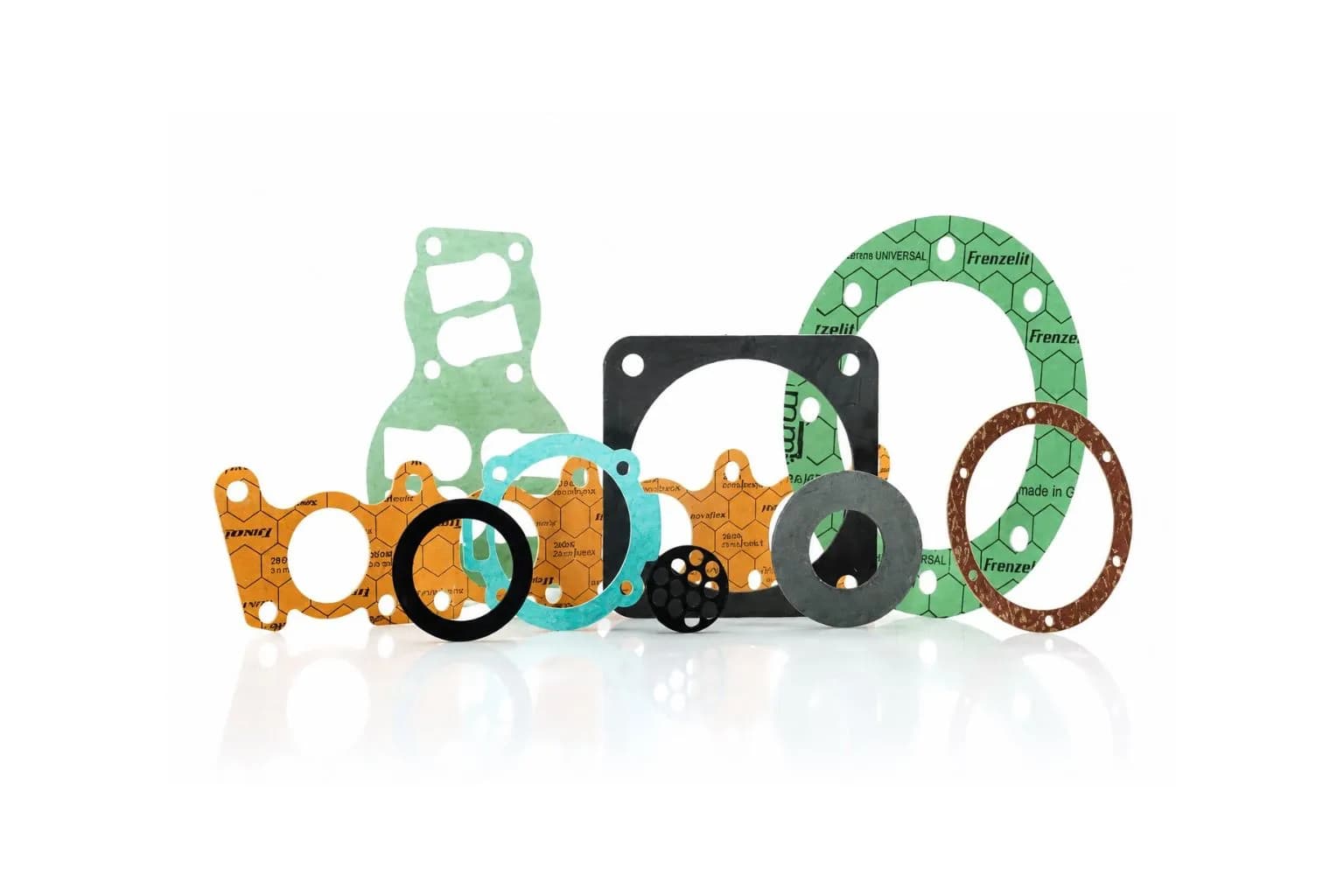
- Custom envelope gasket — manufactured to specific flange sizes, equipment profiles, and operating requirements
Advantages of envelope gaskets
Envelope gaskets are specified wherever PTFE chemical resistance is required but a solid PTFE gasket is unnecessary or impractical.
- Excellent chemical and corrosion resistance via PTFE envelope
- More economical than solid PTFE gaskets of equivalent size
- Higher compressibility than solid PTFE — seals at lower bolt load
- Good sealing performance on standard raised-face flanges
- Non-contaminating material for pharma and food-grade service
- Low friction PTFE surface simplifies maintenance
- Moisture resistant — suitable for wet process environments
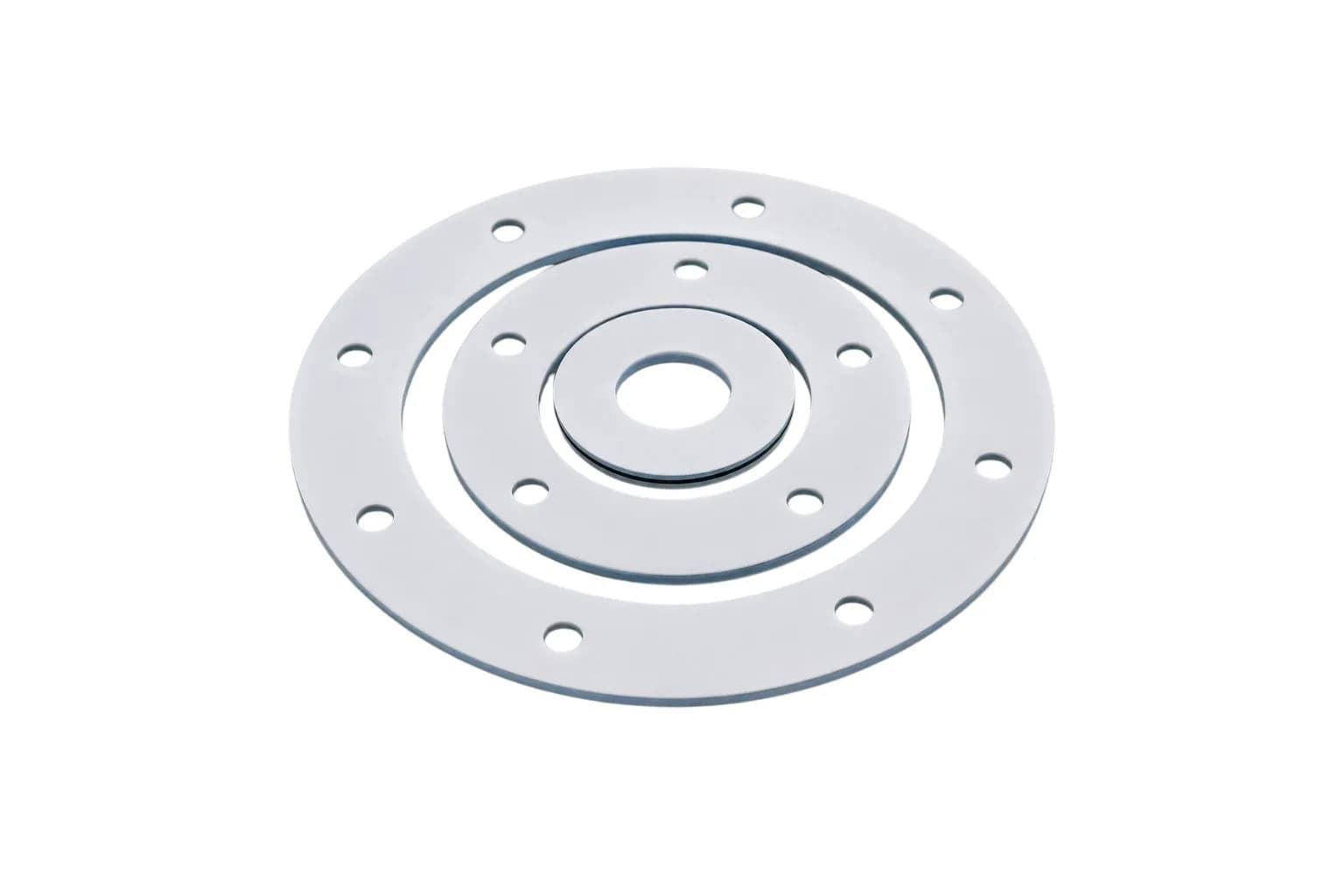
- Available in standard flange sizes and fully custom dimensions
Common envelope gasket applications
Envelope gaskets are widely used wherever corrosion resistance and product purity are essential. Typical envelope gasket applications include:
- Chemical processing plants — acid, alkali, and solvent transfer lines
- Pharmaceutical manufacturing — high-purity process equipment
- Food and beverage processing — hygienic flange connections
- Petrochemical and fertiliser plants
- Water treatment facilities — chemical dosing and process lines
- Pulp and paper — bleaching and chemical recovery systems
- Industrial pipelines, pumps, valves, reactors, and storage tanks
Envelope gasket vs solid PTFE gasket
Both offer excellent chemical resistance, but they suit different flange conditions and budget requirements. Envelope gaskets are often selected when PTFE chemical resistance is needed with better compressibility and lower material cost.
Solid PTFE gaskets suit smaller diameters, high-purity applications requiring no filler contact risk, and situations where maximum chemical barrier integrity is paramount. For a detailed PTFE gasket comparison, see our PTFE Gasket Guide.
How to choose the right envelope gasket
Correct envelope gasket specification requires matching envelope type, filler grade, and dimensions to the actual process and flange conditions.
- Process media — confirm PTFE compatibility; verify filler compatibility for any envelope breach scenario
- Operating temperature — PTFE envelope limit ~260°C continuous; confirm filler limits separately
- Operating pressure — higher pressure may require CNAF, graphite, or metal-insert filler
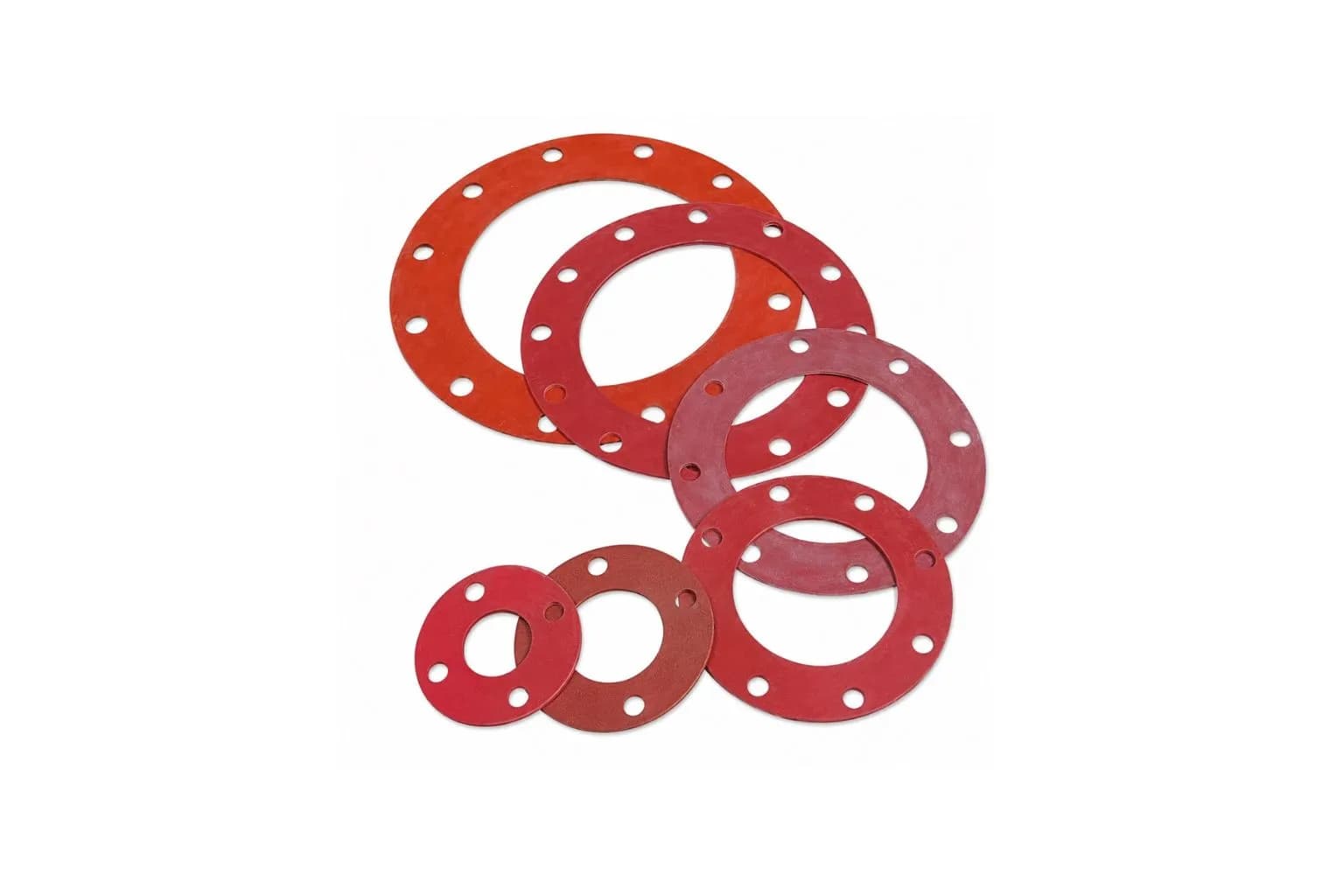
- Flange design — full-face vs ring-type; confirm NPS, pressure class, and bolt circle dimensions
- Envelope type — slit for general service; molded for demanding or high-volume applications
- Industry compliance — FDA, USP Class VI, or project-specific material certification
- Flange condition — worn faces may benefit from expanded PTFE or ePTFE filler for improved conformability
Common installation mistakes
Even high-quality envelope gaskets fail when incorrectly installed. Avoid these frequent errors:
- Incorrect bolt tightening sequence — always use a star (cross) pattern in multiple passes
- Installing on damaged flange faces without surface assessment or repair
- Selecting the wrong filler material for the operating pressure or temperature
- Ordering incorrect gasket dimensions — inner diameter, outer diameter, or thickness
- Reusing a compressed or PTFE-envelope-damaged gasket after opening a flange
- Uneven bolt load causing local over-compression and envelope splitting
Why specify Kemicon for envelope gaskets
Envelope gasket performance depends on PTFE envelope quality, filler selection, and accurate cutting tolerances — none of which is visible once the flange is closed.
Kemicon Industrial LLP manufactures PTFE envelope gaskets in slit and molded configurations with premium filler materials, strict dimensional inspection, and technical support to confirm grade and compliance requirements. Standard catalogue sizes and fully custom dimensions are available for chemical, pharmaceutical, and food processing applications across India and export markets.
Share your flange dimensions, process medium, temperature, and compliance requirements — our engineering team will confirm the correct envelope gasket specification before manufacture.
Quick recommendations
- Corrosive chemical pipelinesSlit PTFE envelope — CNAF filler
- Pharmaceutical / high purityMolded PTFE envelope — FDA-grade filler
- Food processing flangesPTFE envelope — FDA-compliant filler
- Large-diameter chemical flangesEnvelope gasket over solid PTFE
- Maximum chemical barrier integritySolid PTFE gasket (see PTFE guide)
Frequently asked questions
What is an envelope gasket?
What is a PTFE envelope gasket?
What is the difference between an envelope gasket and a solid PTFE gasket?
Where are envelope gaskets used?
Are envelope gaskets resistant to chemicals?
Can envelope gaskets be custom manufactured?
Which industries commonly use envelope gaskets?
How do I choose the right envelope gasket?
Still unsure which specification fits?
Talk to our gasket engineer. Share medium, temperature, pressure class, and flange standard - we will recommend the right construction.