Quick summary
- Kammprofile (Camprofile) gaskets use a grooved metal core with graphite or PTFE facing on both sides.
- Preferred for heat exchangers, worn flange faces, and joints with limited bolt load.
- Seals at lower seating stress than spiral wound gaskets — ideal when torque is constrained.
- Graphite facing for high temperature; PTFE facing for aggressive chemical and pharma service.
Industrial sealing systems often operate under extreme temperatures, high pressure, and repeated thermal cycling. In these demanding environments, the wrong gasket leads to leaks, equipment damage, and costly unplanned maintenance.
A Kammprofile gasket — also known as a Camprofile gasket — is a high-performance semi-metallic seal designed for applications requiring exceptional reliability and long service life. Its precision-machined grooved metal core combined with a soft facing layer makes it the preferred choice for heat exchangers, pressure vessels, pipelines, and critical process equipment.
This guide covers Kammprofile gasket construction, core and facing materials, gasket types, applications, selection criteria, and common installation mistakes — so engineers and procurement teams can specify with confidence.
What is a Kammprofile gasket?
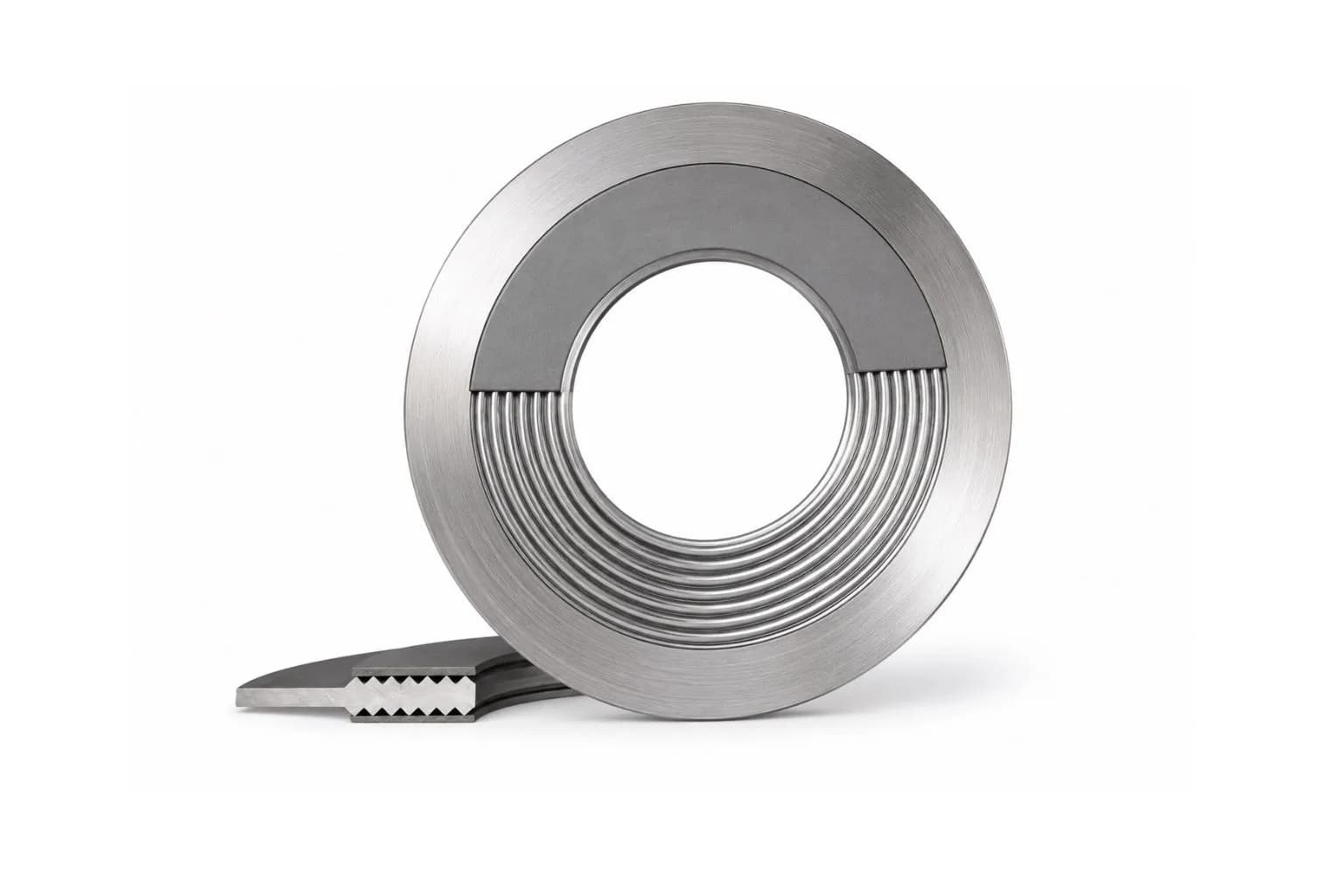
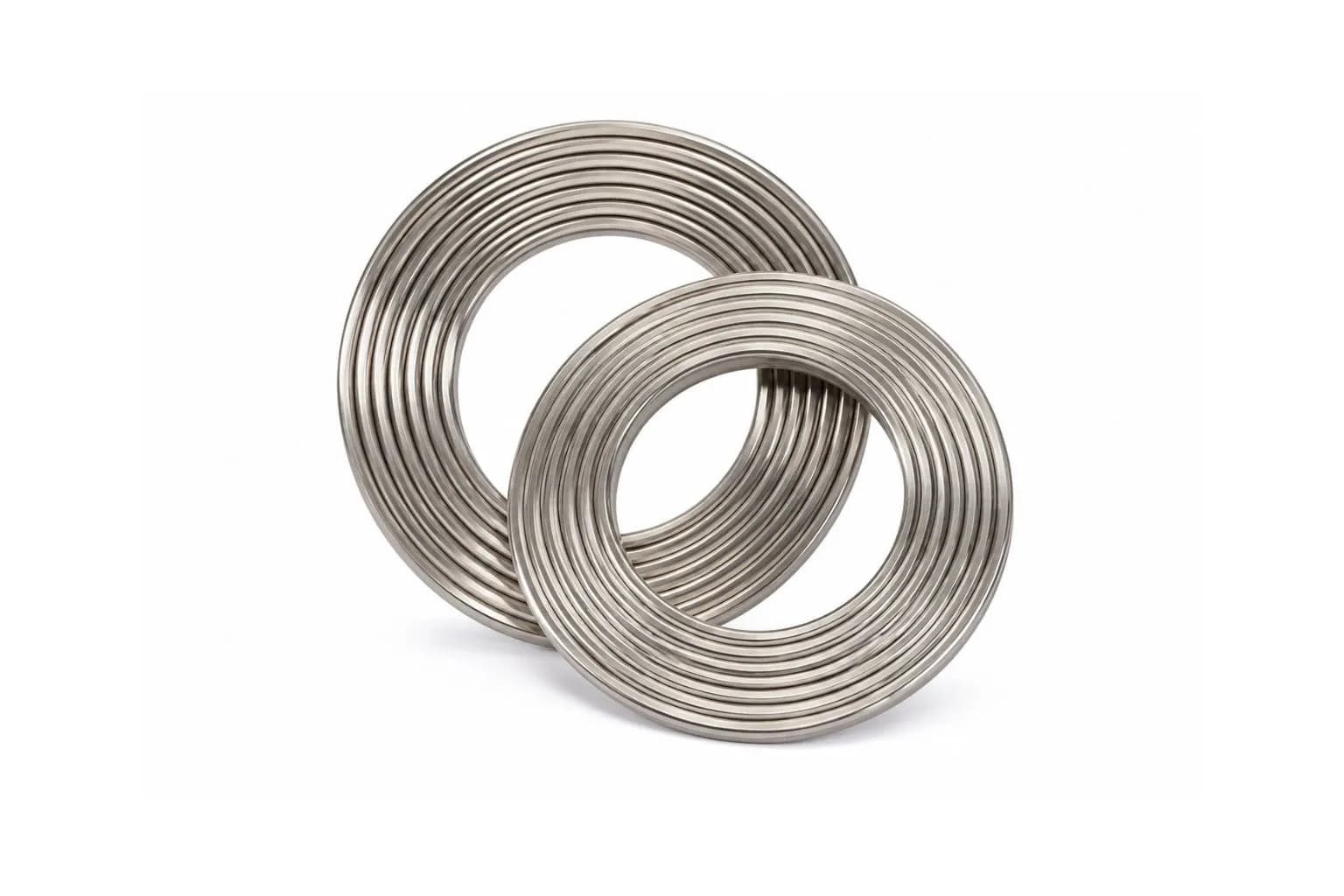
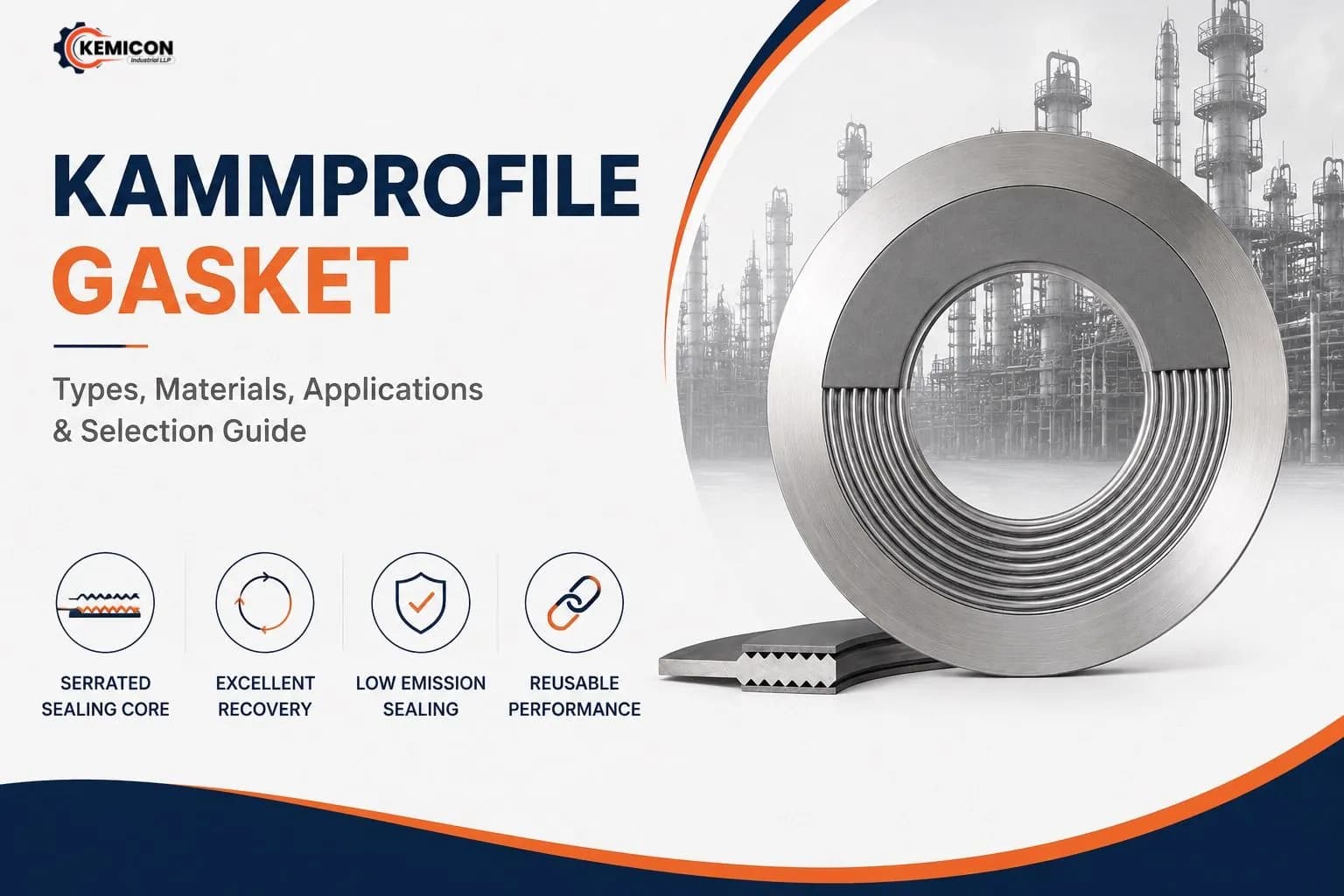
A Kammprofile gasket is a semi-metallic gasket manufactured from a precision-machined metal core with concentric serrated grooves on both sealing faces. These grooves are covered with soft facing layers — typically flexible graphite or PTFE — that improve sealing by conforming to flange surface irregularities.
The metal core provides mechanical strength and blowout resistance; the facing material creates the actual seal. This combination delivers sealing performance that conventional sheet gaskets and, in some applications, spiral wound gaskets cannot match — particularly on heat exchangers, worn flange faces, and joints with limited bolt load.
Kammprofile and Camprofile refer to the same gasket design. Both spellings are used across industry specifications and procurement documents.
How does a Kammprofile gasket work?
When installed between two flanges and compressed, the soft facing material flows into microscopic surface imperfections on the flange face. The grooved metal core distributes bolt load evenly across the sealing peaks, concentrating stress where it creates the tightest seal.
The concentric groove pattern increases sealing efficiency compared with a flat metal core, while the solid metal structure resists blowout under internal pressure. The gasket maintains reliable sealing through thermal expansion, pressure fluctuations, and repeated cycling — provided the correct core grade and facing material are specified.
Construction of a Kammprofile gasket
Every Kammprofile gasket combines two distinct components — a grooved metal core and a soft facing layer on each sealing surface. Understanding each part is essential for correct specification.
Metal core materials
The grooved core provides structural integrity and maintains gasket stability under high bolt loads and internal pressure. Core material selection depends on operating pressure, temperature, and chemical compatibility with the process environment.
- Stainless Steel 304 — general industrial and heat exchanger service
- Stainless Steel 316 — chloride and chemically aggressive environments
- Carbon Steel — lower-cost applications where corrosion is not a concern
- Monel — hydrofluoric acid and seawater service
- Inconel — extreme temperature and severe corrosion duty
- Duplex Stainless Steel — high strength with improved chloride resistance
- Hastelloy — highly aggressive chemical and acid environments
Facing materials
The facing layer creates the sealing surface that contacts the flange. Selecting the wrong facing is one of the most common causes of Kammprofile gasket failure in the field.
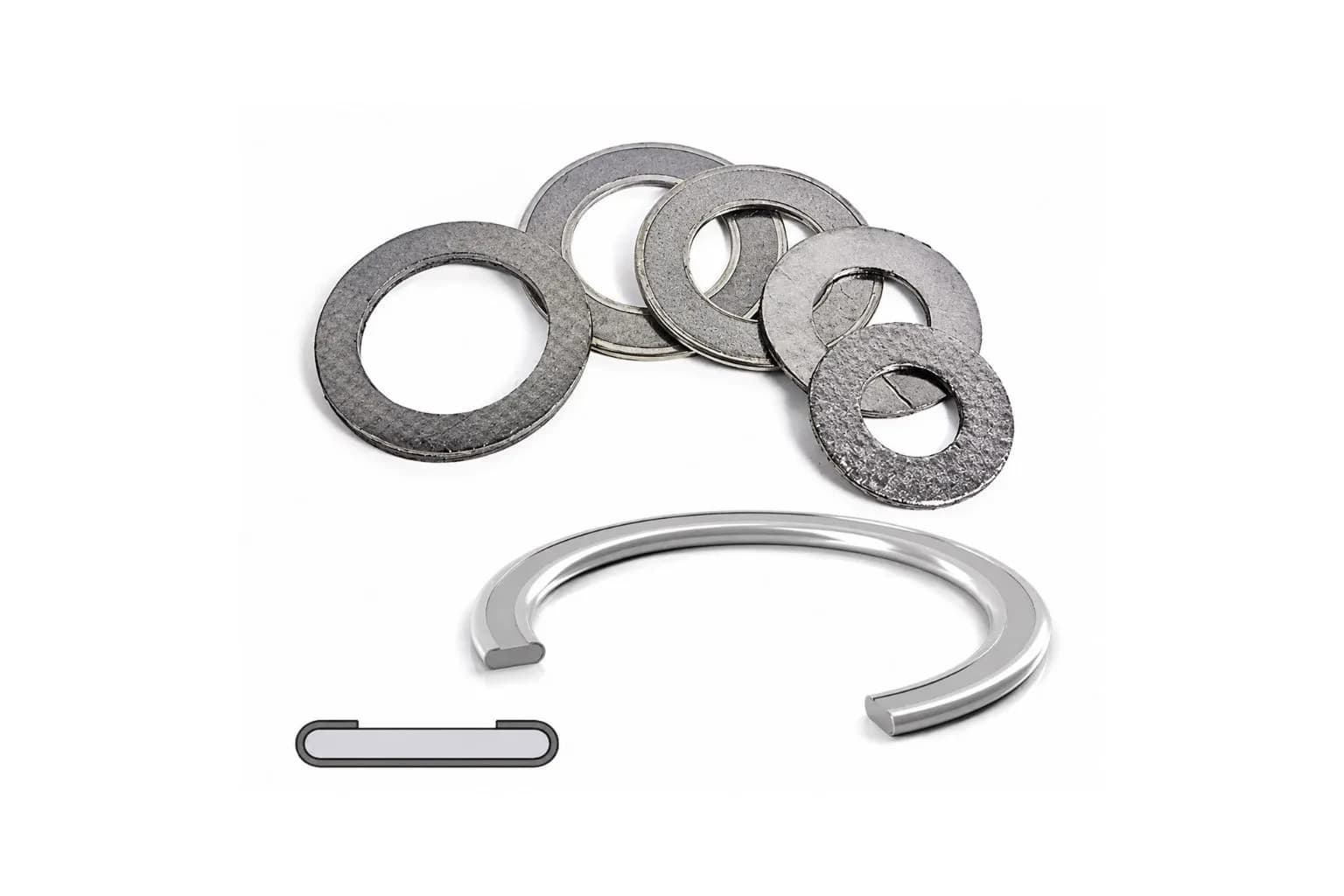
- Flexible Graphite — high temperature, steam, hydrocarbons, and thermal cycling (most common facing)
- PTFE — aggressive chemicals, high purity, pharmaceutical, and food-grade service
- Expanded Graphite — enhanced conformability on uneven flange surfaces
- Ceramic fibre — specialist high-temperature applications beyond standard graphite limits
Types of Kammprofile gaskets
Kammprofile gasket types differ by the presence of guide rings and whether the gasket is a standard catalogue size or custom-engineered for specific equipment.
- Basic Kammprofile — no outer guide ring; used in tongue-and-groove or male-and-female flange configurations
- Kammprofile with outer guide ring — centres the gasket on raised-face flanges and limits over-compression; the most common type in industrial piping
- Custom Kammprofile — engineered to specific equipment dimensions, pressure ratings, and project requirements
Advantages of Kammprofile gaskets
Kammprofile gaskets are specified across refineries, chemical plants, and power stations because they solve sealing problems that flat gaskets and, in some cases, spiral wound gaskets cannot.
- Excellent sealing reliability — seals at lower seating stress than spiral wound gaskets
- High-pressure and high-temperature capability with the correct core and facing grade
- Low gasket creep — solid metal core resists cold flow under sustained bolt load
- Strong blowout resistance in properly rated flange systems
- Excellent performance under thermal cycling and flange movement
- Preferred for heat exchangers, worn flange faces, and limited bolt-load joints
- Straightforward installation — no special tooling required
- Long service life and reduced maintenance when correctly specified
- Available in standard ASME sizes and fully custom dimensions
Common Kammprofile gasket applications
Kammprofile gaskets are used wherever dependable sealing under cycling duty is essential. The Kammprofile gasket for heat exchanger service is one of the most common specifications in refineries and process plants worldwide.
- Heat exchangers — shell, tube sheet, and channel cover flanges
- Pressure vessels and reactors
- Oil and gas pipelines and process transfer lines
- Petrochemical and refinery process equipment
- Chemical processing plants
- Power generation — boilers, turbines, and condenser flanges
- Offshore platforms and marine equipment
- Industrial pipelines, compressors, pumps, and valves
- Pharmaceutical and high-purity process lines (PTFE-faced)
Kammprofile gasket vs spiral wound gasket
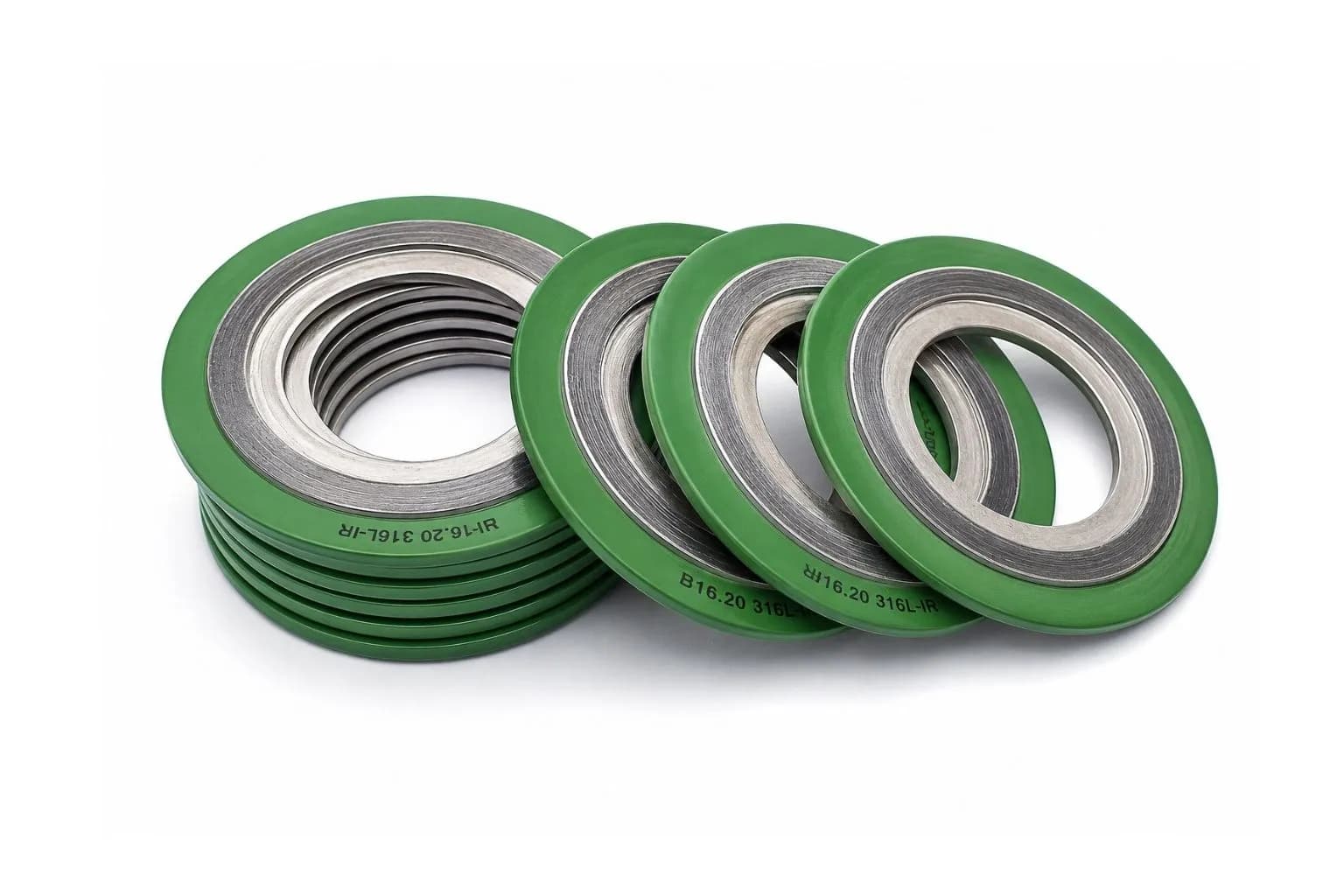
Both are high-performance semi-metallic gaskets, but they suit different flange conditions and operating requirements. A Kammprofile gasket seals at lower seating stress and recovers well on worn or uneven flange faces — making it the preferred choice for many heat exchanger applications.
Spiral wound gaskets remain the default for standard raised-face piping with adequate bolt load and are proven across the widest range of pressure classes. For a detailed spiral wound comparison including filler selection and ASME standards, see our Complete Guide to Spiral Wound Gaskets.
How to choose the right Kammprofile gasket
Correct Kammprofile gasket specification requires matching core metal, facing material, and gasket type to the actual flange and operating conditions.
- Operating pressure — confirm design pressure and pressure class; select core grade accordingly
- Operating temperature — minimum and maximum; graphite facing for high temperature, PTFE for chemical service below ~260°C
- Process media — exact fluid or gas; confirm facing compatibility including oxidising media limits for graphite
- Flange type — raised face, tongue-and-groove, or male-and-female; determines guide ring requirement
- Flange condition — worn or pitted faces favour Kammprofile over spiral wound or flat sheet gaskets
- Bolt load available — limited bolt strength makes Kammprofile preferable to spiral wound
- Industry standards — ASME B16.20, project specifications, and material certification (MTR, NACE MR0175)
- Gasket dimensions — NPS, pressure class, and flange standard for accurate sizing
Common installation mistakes
Even a correctly specified Kammprofile gasket will leak if installed incorrectly. Avoid these frequent errors:
- Incorrect bolt tightening sequence — always use a star pattern to equalise compression
- Installing on severely damaged flange faces without surface assessment or facing repair
- Reusing a compressed or damaged gasket after opening a flange for maintenance
- Selecting the wrong facing material for the process medium or temperature
- Ordering incorrect gasket dimensions — inner diameter, outer diameter, or thickness
- Applying excessive bolt load beyond the gasket manufacturer's recommended seating stress
Why specify Kemicon for Kammprofile gaskets
Kammprofile gasket performance depends on groove geometry precision, facing bond quality, and correct core metal grade — none of which is visible once the flange is closed.
Kemicon Industrial LLP manufactures Kammprofile gaskets with precision-machined grooved cores, premium graphite and PTFE facings, strict dimensional inspection, and Material Test Reports on request. Standard catalogue sizes and fully custom dimensions are available for heat exchangers, pressure vessels, and process piping.
Share your flange standard, NPS, pressure class, operating conditions, and facing preference — our engineering team will confirm the correct Kammprofile gasket specification before manufacture.
Quick recommendations
- Heat exchanger flangesKammprofile — Graphite facing
- Limited bolt load / worn facesKammprofile — Graphite or PTFE facing
- Chemical / pharma serviceKammprofile — PTFE facing
- Standard raised-face piping, 300#+Spiral Wound — Graphite-filled
- Tongue-and-groove flangesBasic Kammprofile (no guide ring)
Frequently asked questions
What is a Kammprofile gasket?
What is the difference between a Kammprofile gasket and a spiral wound gasket?
Where are Kammprofile gaskets used?
Which facing materials are available for Kammprofile gaskets?
Are Kammprofile gaskets suitable for high temperatures?
Can Kammprofile gaskets be manufactured in custom sizes?
How long do Kammprofile gaskets last?
Which industries use Kammprofile gaskets?
Still unsure which specification fits?
Talk to our gasket engineer. Share medium, temperature, pressure class, and flange standard - we will recommend the right construction.